Polyaspartic vs. Epoxy Garage Floor Coatings: 2026 Comparison Guide

Elissa Merritt • April 22, 2026

Polyaspartic vs. epoxy garage floor coatings differ in cure time, UV stability, and long-term durability. All five options let you cover cracked or faded concrete without tearing it out and pouring a new slab, typically at a cost of $3 to $10 per square foot. Concrete Surface Pros applies both systems in garages across Tampa Bay and helps homeowners choose the right coating based on how they use their garage, their budget, and how long they want the floor to last.

You've narrowed it down to two options, and both have strong cases. Epoxy has been the go-to garage floor coating for decades, and polyaspartic is the newer system that promises faster installation and better UV performance. The right choice isn't about which product is "better" overall. It's about which one best matches your garage, climate, and priorities.

How Epoxy and Polyaspartic Coatings Differ

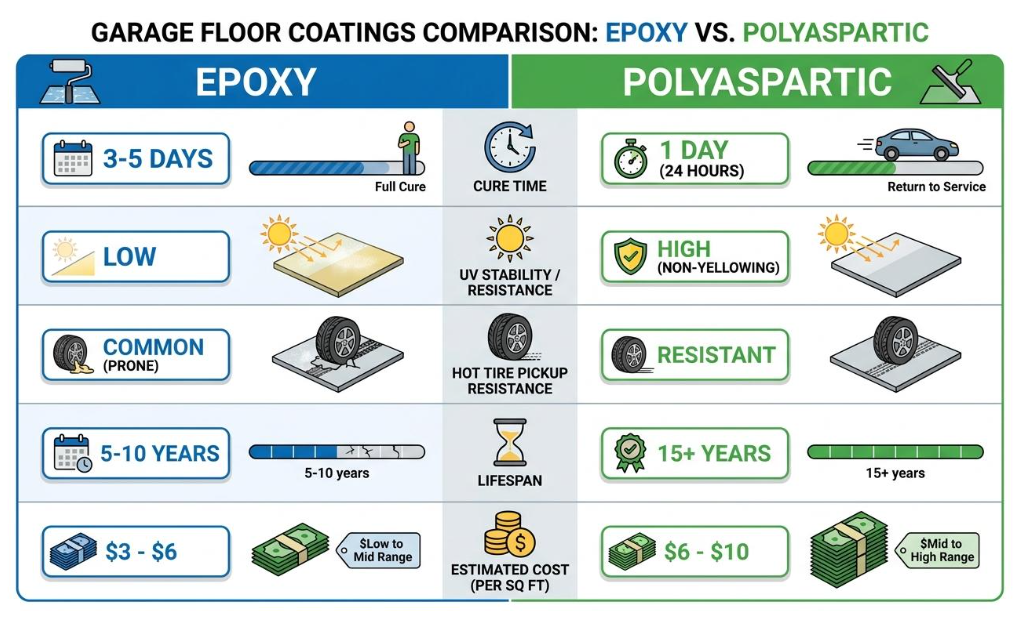
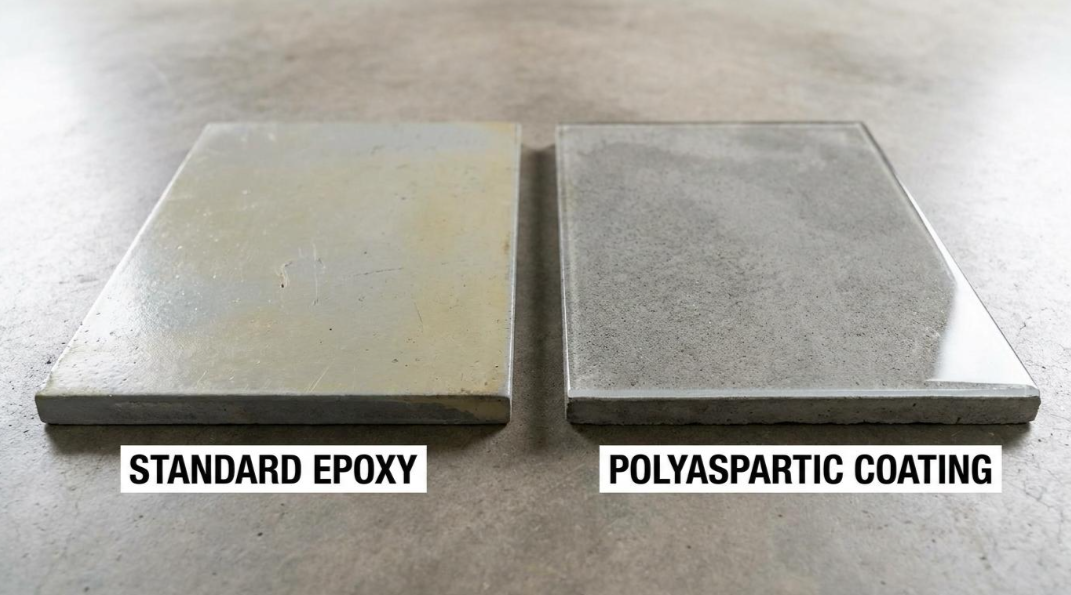
Epoxy is a two-part resin system that bonds to concrete through a chemical reaction. It creates a hard, durable surface that resists stains, chemicals, and abrasion. The trade-off is time: epoxy needs 3 to 5 days of cure time before you can park on it, and standard formulations yellow when exposed to UV light. In a south-facing Tampa garage with the door open regularly, that yellowing typically shows within 12 to 18 months.

Polyaspartic is a newer coating chemistry that cures through a different mechanism, allowing same-day installation and same-day return to light use. It's inherently UV-stable, meaning it won't yellow or chalk in Florida sun. Polyaspartic also resists hot tire pickup, the black marks that hot tires leave on garage epoxy floors when they cool and bond to the surface overnight.

Performance in Tampa's Heat and Humidity

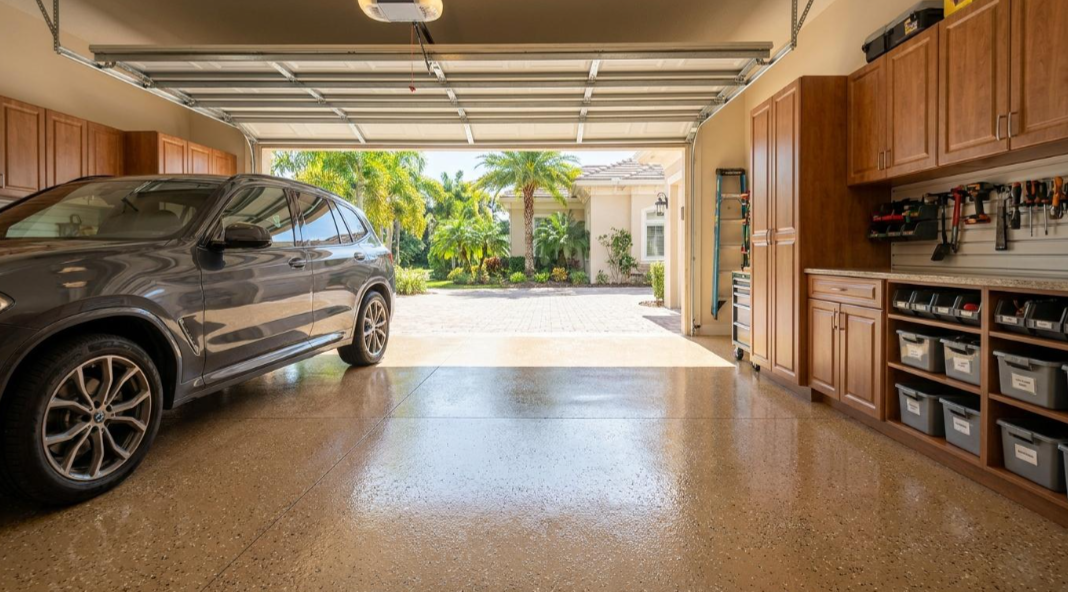
Open garage with parked SUV and built-in cabinets, looking out to a sunny driveway and garden.

Tampa's climate puts garage floor coatings through conditions that most manufacturer spec sheets don't account for. Summer garage temperatures reach 100°F or higher with humidity above 80%. That combination affects both coatings differently.

Epoxy performs well in temperature-controlled environments. Florida garages are the opposite: hot, humid, and sun-baked year-round.

  • UV degradation typically yellows standard epoxy within a year of regular sun exposure.
  • Moisture vapor transmission through the concrete slab, driven by Florida's high water table, can cause bubbling or delamination if the installer skips moisture testing and the application of a vapor barrier.
  • Hot tire pickup pulls the epoxy coating off the slab as a car cools in the garage.

Polyaspartic handles these conditions better. UV stability means no color change, the flexible cure resists hot tire marks, and faster application reduces the window during which humidity can interfere with adhesion. For homeowners weighing coatings against other flooring options, our epoxy vs. tile comparison breaks down a different but equally common decision.

Cost, Cure Time, and Long-Term Value

Two coated concrete tiles labeled “Standard Epoxy” and “Polyaspartic Coating” shown side by side.

When evaluating coatings, the true cost comes down to long-term value and installation disruption, not just the initial price.

Epoxy: Cheaper Upfront

Epoxy's lower upfront cost ($3 to $6 per square foot installed) makes it attractive on paper. For a standard two-car garage of 400 to 500 square feet, that's $1,200 to $3,000. Polyaspartic runs $6 to $10 per square foot, or $2,400 to $5,000 for the same garage. Our garage floor coating cost breakdown covers the full range of factors that affect your final price.

Polyaspartic: Cheaper Over the Long Run

But the cost per year tells a different story. A quality polyaspartic system with proper surface preparation is designed to last 15 to 20 years in Tampa conditions, backed by Concrete Surface Pros' lifetime warranty. Standard epoxy without a UV-stable topcoat typically shows visible wear in 5 to 7 years, and typically needs recoating or replacement within 10 years. That means epoxy's real cost per year is often higher than polyaspartic's, despite the lower initial price.

Ready in Hours, Not Days

Cure time also carries a hidden cost. Three to five days without garage access means cars parked in the driveway, tools and storage inaccessible, and Florida afternoon rain hitting everything you moved outside. Polyaspartic's one-day cure eliminates most of that disruption.

Frequently Asked Questions

Can you apply polyaspartic over an existing epoxy floor?

Yes, if the existing epoxy is well-adhered and properly prepared. The surface needs diamond grinding to create a mechanical bond profile. Concrete Surface Pros tests adhesion before recommending an overlay to ensure the new polyaspartic layer won't delaminate from a failing epoxy base underneath.

Will epoxy garage floor coating yellow in a screened garage?

Screened or covered garages reduce UV exposure significantly but don't eliminate it entirely. Indirect sunlight still reaches the floor through open bays and reflected light. Standard epoxy yellows more slowly in covered garages but still tends to show discoloration over 2 to 3 years in Tampa's latitude.

How soon can I park on a polyaspartic garage floor after installation?

Light foot traffic is safe after 4 to 6 hours. Most polyaspartic systems can handle vehicle traffic within 24 hours of application. Full chemical resistance develops over 72 hours, so avoid spilling gasoline, brake fluid, or harsh cleaners on the surface during that initial curing window.

Find the Right Coating for Your Tampa Garage

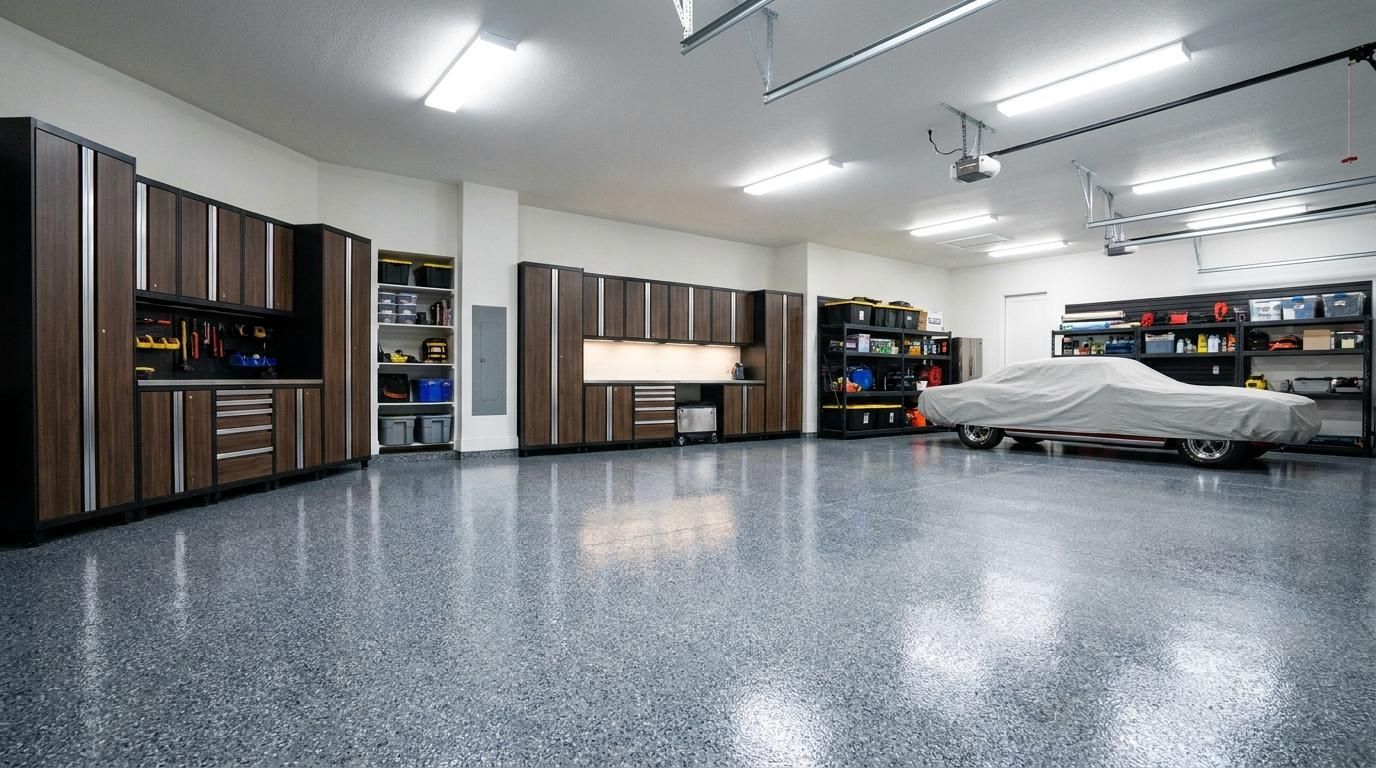
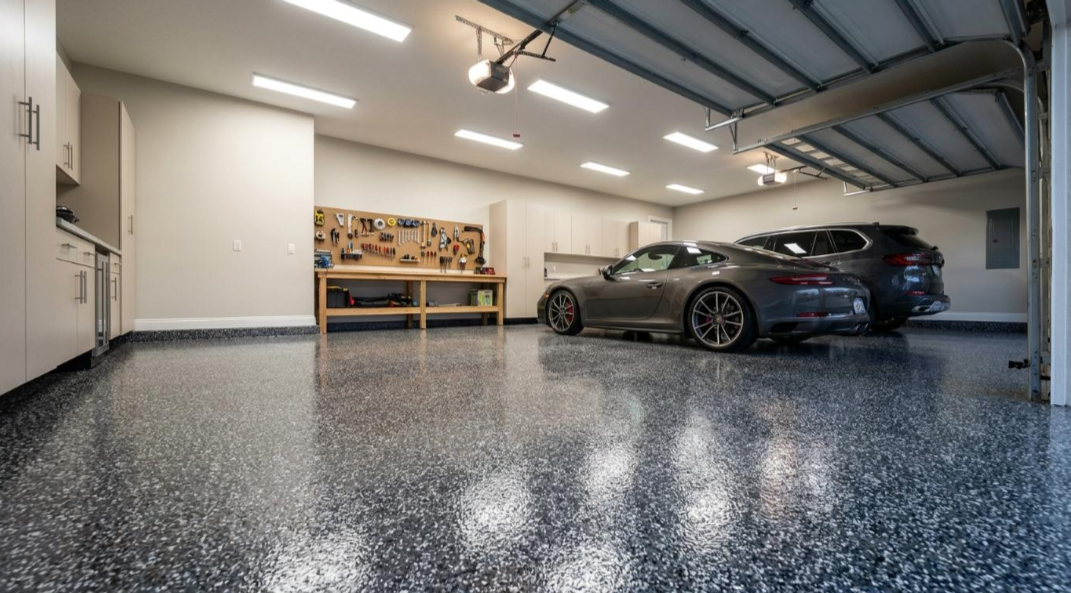
Modern garage with a gray sports car, black SUV, and workbench on a speckled epoxy floor

Epoxy works for budget-conscious homeowners with covered garages who don't mind a longer cure time and some yellowing down the road. Polyaspartic is the stronger choice for Tampa's sun-exposed garages, anyone who wants their car back in the garage the same day, and homeowners planning to keep the coating for 15 years or more.

Either way, the prep matters more than the product. Both systems require professional diamond grinding and moisture testing to ensure proper bonding. Skip those steps, and even the best coating will fail.

Contact Concrete Surface Pros online or call (727) 420-9541 for a free garage floor evaluation. We'll assess your slab conditions, walk you through coating samples in person, and recommend the system that fits your garage, your timeline, and your budget.

Tropical patio with wicker seating, fireplace, and lush palms surrounding a stone-tiled courtyard
By Elissa Merritt April 28, 2026
Explore 5 concrete patio resurfacing ideas for Tampa Bay homes. From decorative flake to cool deck coatings, find the right finish for Florida weather.
Backyard swimming pool with clear blue water and a metal handrail by the shallow end
By Elissa Merritt April 15, 2026
Pool deck crack repair in Florida depends on the crack size, cause, and the deck's age. Learn when patching works and when full resurfacing is the smarter fix.
Modern hotel lobby with marble floors, reception desk, seating, and glass entrance doors
By Elissa Merritt April 10, 2026
Commercial epoxy flooring in Tampa costs $3-$12 per square foot installed. See pricing by system type, facility size, and surface prep requirements.
By Elissa Merritt March 5, 2026
How thick is epoxy flooring? Learn the ideal thickness for garage, patio, and commercial floors and why this spec determines how long a coating lasts.
By Elissa Merritt March 2, 2026
Learn which products damage epoxy garage floors and how Tampa Bay homeowners should handle oil, tire marks, and seasonal cleaning challenges.
By Elissa Merritt February 5, 2026
Is tile or epoxy better for garage floors? Concrete Surface Pros compares their costs, durability, and maintenance to help you choose the right floor solution.
By Elissa Merritt February 2, 2026
What's the best epoxy coating for garage floors? Tampa's concrete coating experts explain why professional polyaspartic systems beat DIY kits every time.
By Elissa Merritt January 8, 2026
Learn how to repair epoxy floor coating issues like peeling, cracks, and bubbles. Get expert maintenance tips and find out when to call Concrete Surface Pros.
By Elissa Merritt January 5, 2026
Learn how to install epoxy floor coating with our step-by-step guide. Discover the critical steps DIYers miss and why hiring pros is your best course of action.
By Elissa Merritt December 4, 2025
Learn the most regrettable DIY garage floor coating mistakes and how to avoid them. Protect your floor and save money with pro tips from Concrete Surface Pros.
Show More