Pool Deck Crack Repair in Florida: When To Patch vs. When To Resurface (2026)
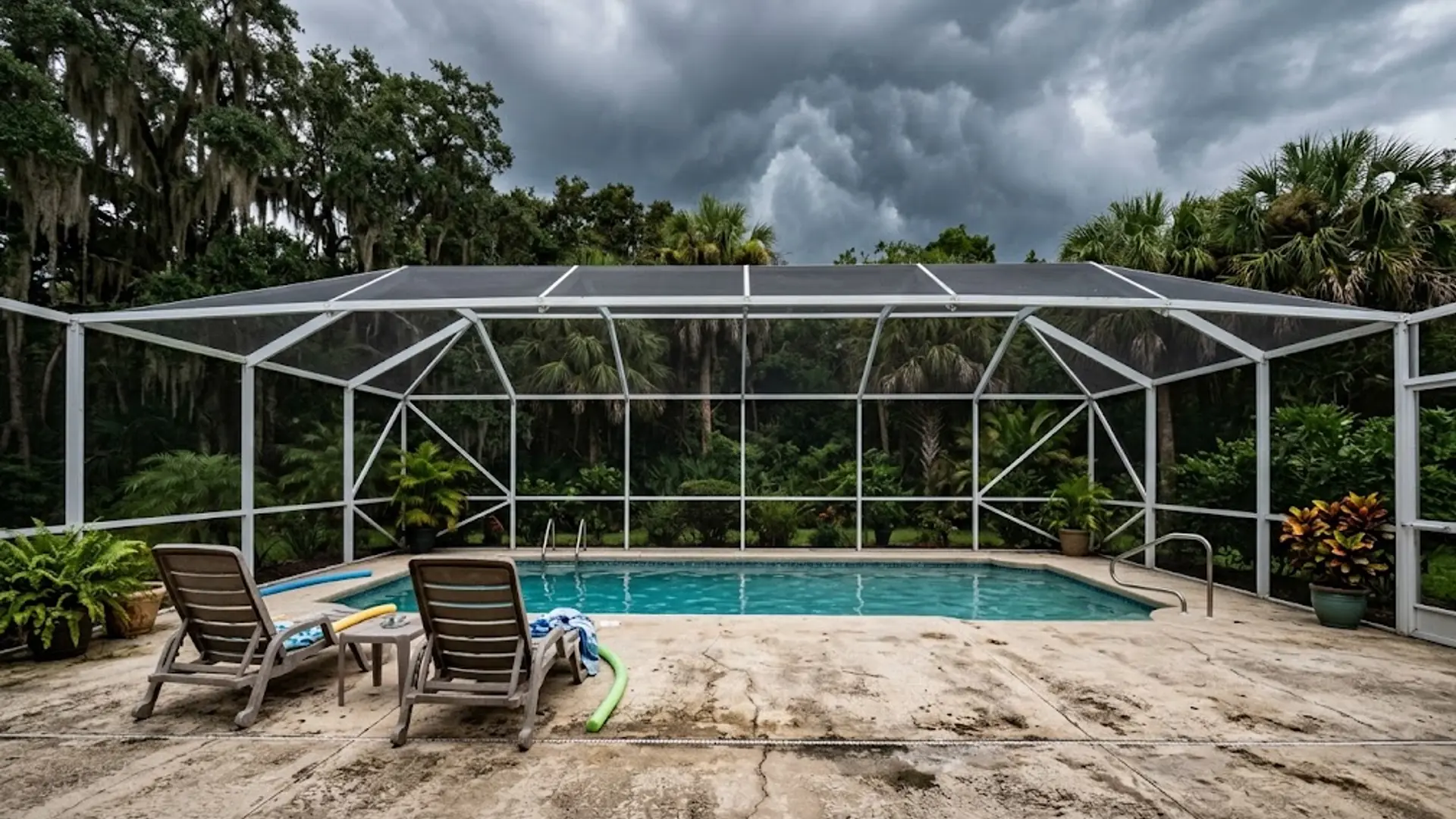
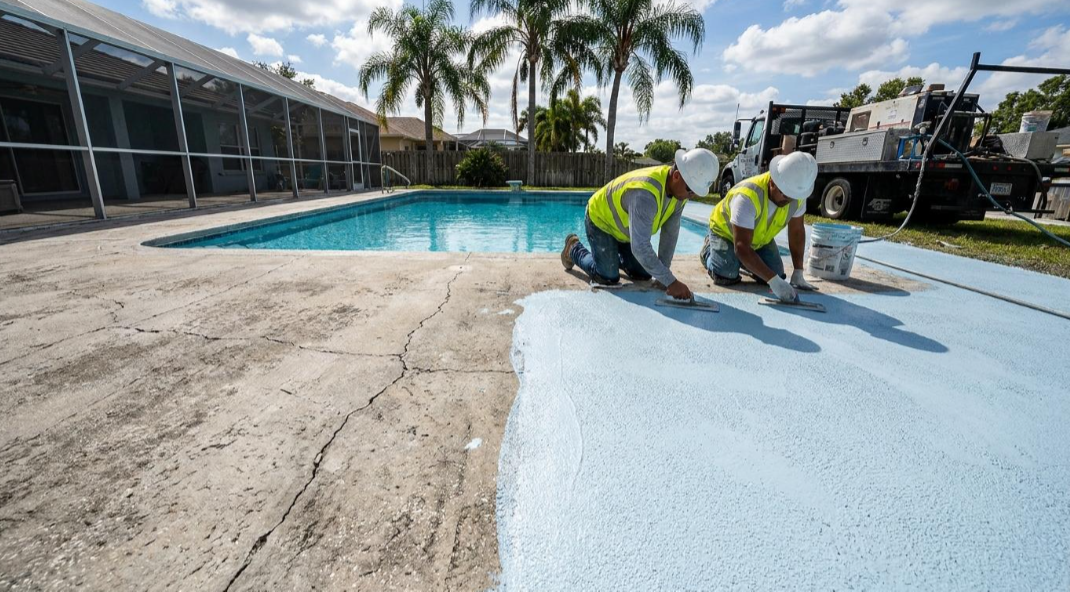
Repairing a cracked pool deck in Florida starts with identifying whether your cracks are cosmetic surface lines or structural failures caused by settling, root intrusion, or thermal expansion. Hairline cracks under one-eighth of an inch wide can be patched for $200 to $500, while widespread cracking across an aging deck often means full resurfacing at $3 to $8 per square foot. Concrete Surface Pros evaluates pool decks across Tampa Bay and explains how to tell the difference below.
Most homeowners call about "a crack in the pool deck," assuming that it's a single repair. But in Florida, surface cracks are rarely the actual problem. They're symptoms of moisture cycling, soil settlement, or UV degradation occurring beneath. Treating the crack without addressing the cause means you'll be calling again next year for the same spot, plus two new ones.
Why Pool Decks Crack in Florida
Florida's climate creates a unique combination of stressors that most northern concrete never faces.
Thermal Shock from Sun and Sudden Rain
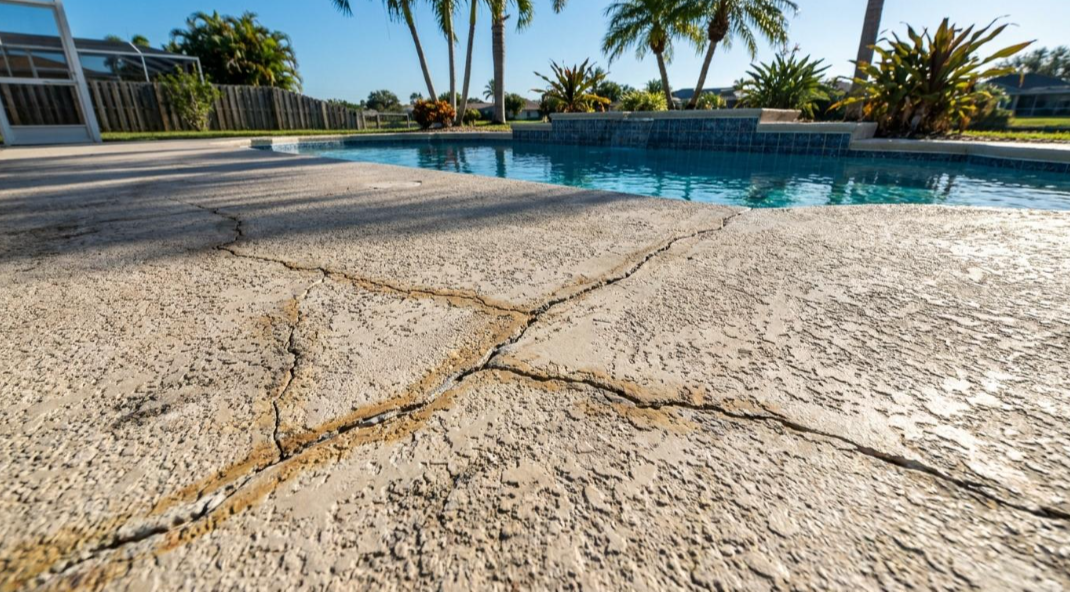
Tampa Bay pool decks absorb direct sun for 250-plus days per year, heating surfaces to 140°F or higher. When afternoon storms drop heavy rain on that superheated concrete, the rapid cooling creates thermal shock that weakens the slab over repeated cycles.
Shifting Sandy Soil and Subsurface Voids
Subsurface moisture adds another layer. Florida's sandy soil drains quickly but shifts under sustained saturation during the rainy season. That movement creates voids beneath the slab, and unsupported sections crack under foot traffic and furniture weight.
Tree Roots Pushing from Below
Tree roots from palms and live oaks compound the problem by pushing upward against the concrete.
Understanding these patterns is similar to diagnosing coating repairs on other surfaces , where the root cause matters more than the visible damage.
When a Patch Is Enough
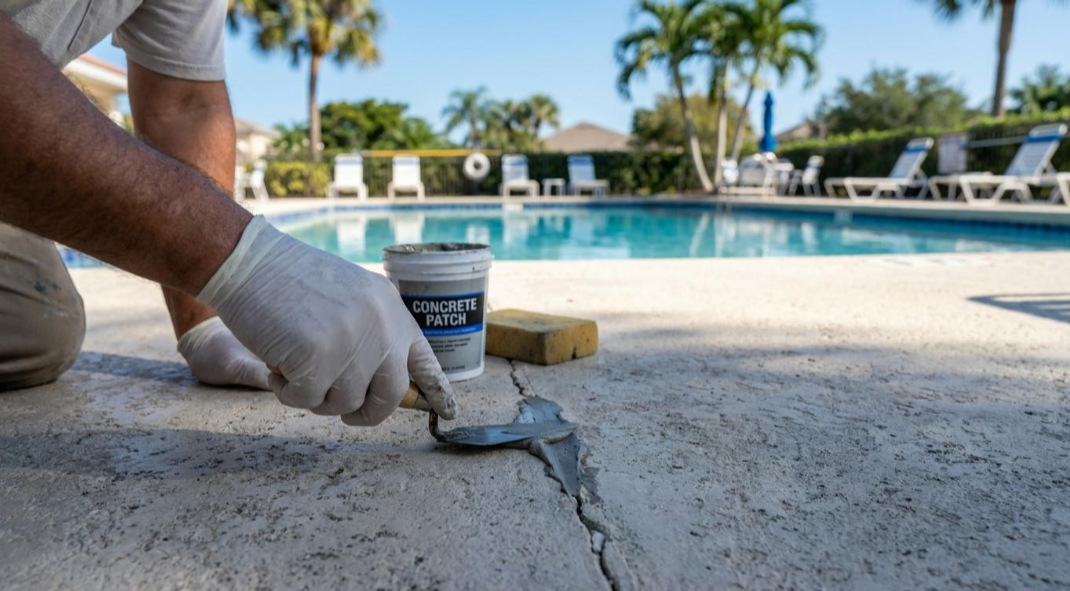
Patching works when the damage is isolated, and the surrounding concrete is structurally sound. Hairline cracks under one-eighth of an inch wide that don't shift when you press on either side are typically cosmetic. These respond well to polymer-modified cement fillers or epoxy injection, and repairs hold for 3 to 5 years in Florida conditions when applied correctly.
A single crack near a control joint or along an expansion line is also a good candidate for patching. These cracks follow the engineered stress points that contractors cut into the original pour. Patching costs $200 to $500 for most isolated repairs and takes one day to complete.
The key qualifier: if fewer than 10% of your total deck area shows cracking, patching is usually the right call. Concrete Surface Pros offers pool deck coatings that include crack repair as part of the resurfacing prep when needed.
When Full Resurfacing Makes More Sense
Resurfacing becomes the better investment when:
- Cracks are spread across 20% or more of the deck
- Patches have already failed once
- When the surface shows widespread spalling and pitting beyond cracking
A pattern of branching cracks that resembles a spider web usually indicates that the slab itself is fatiguing, and individual patches won't stop new cracks from forming between the old ones.
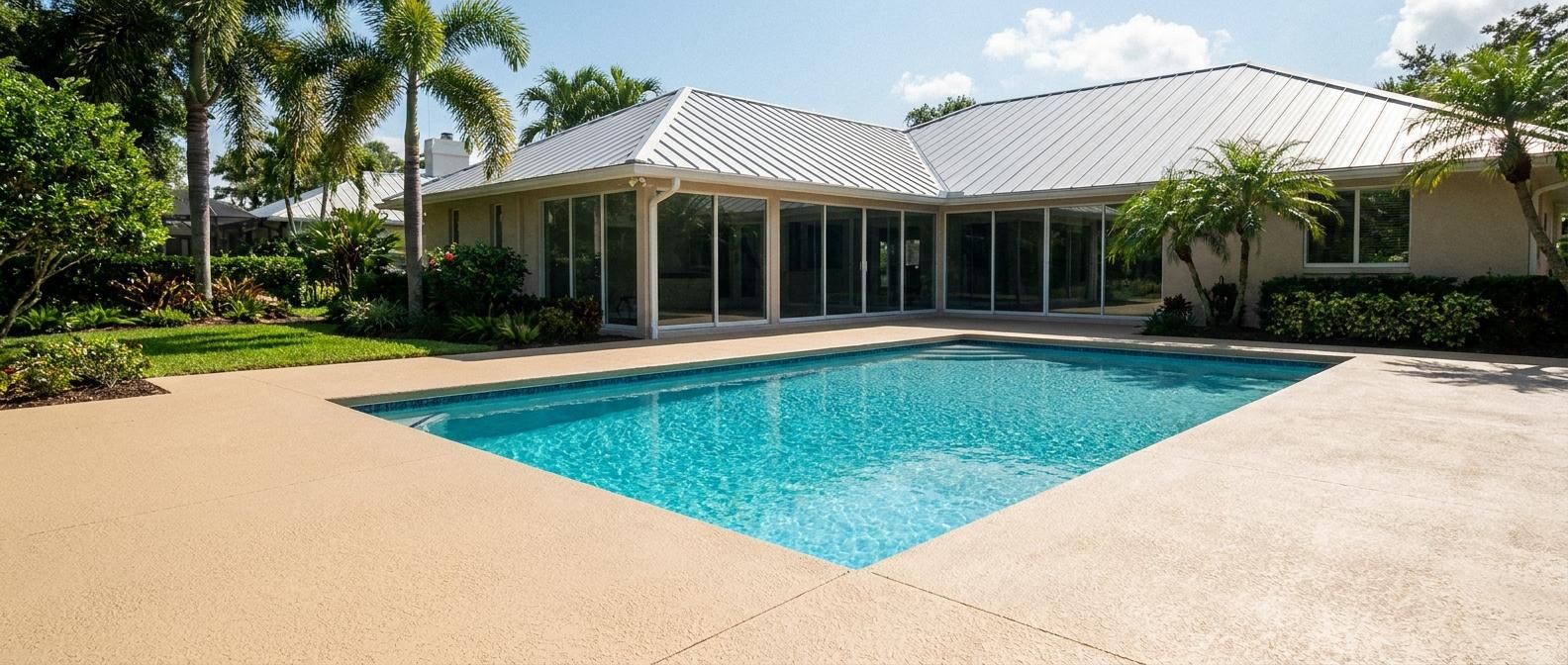
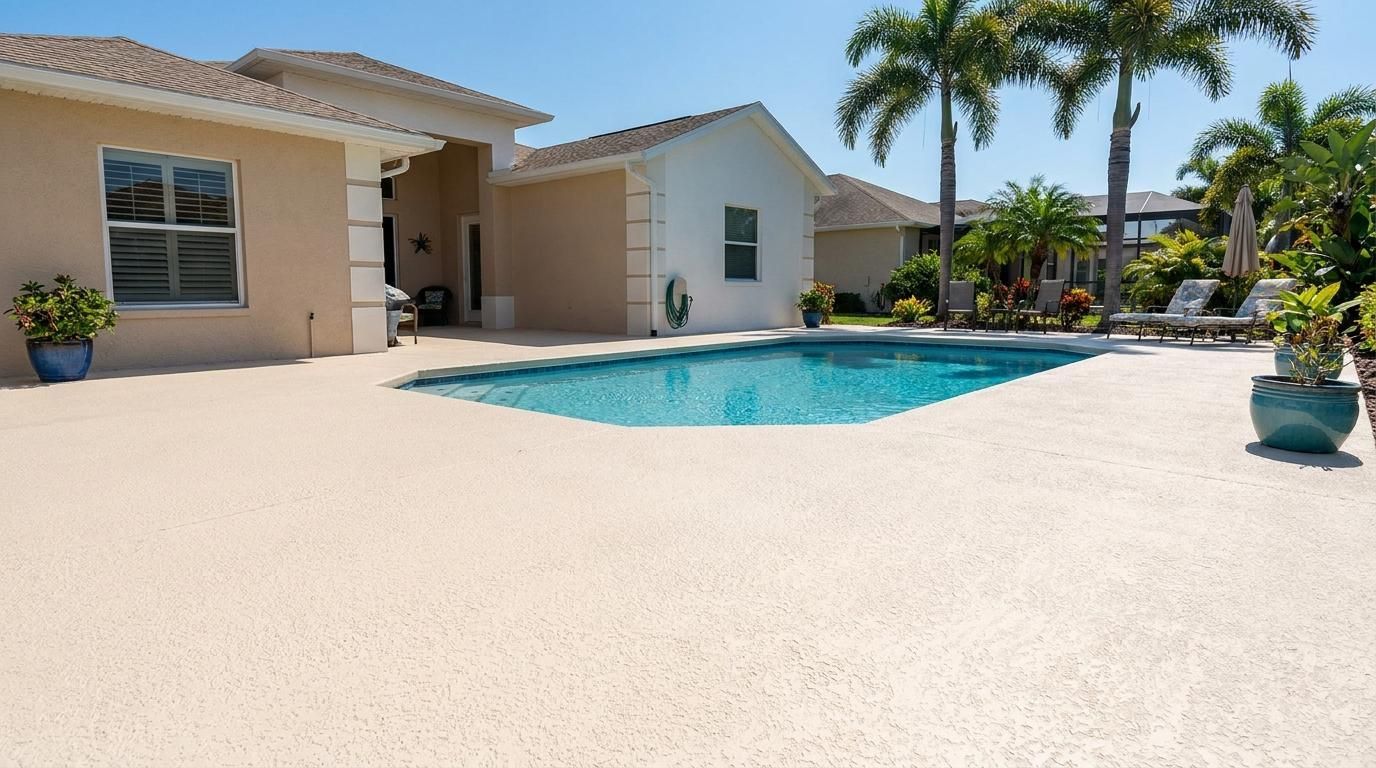
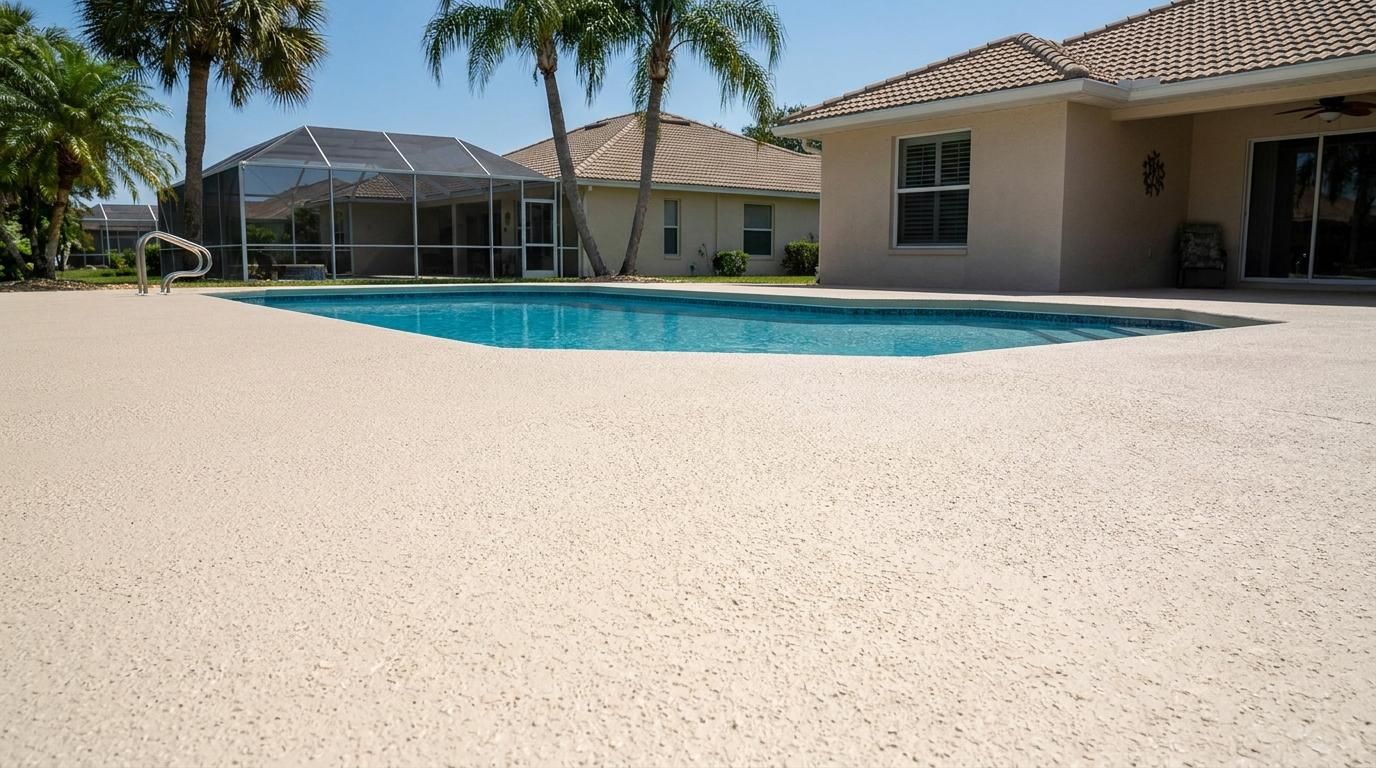
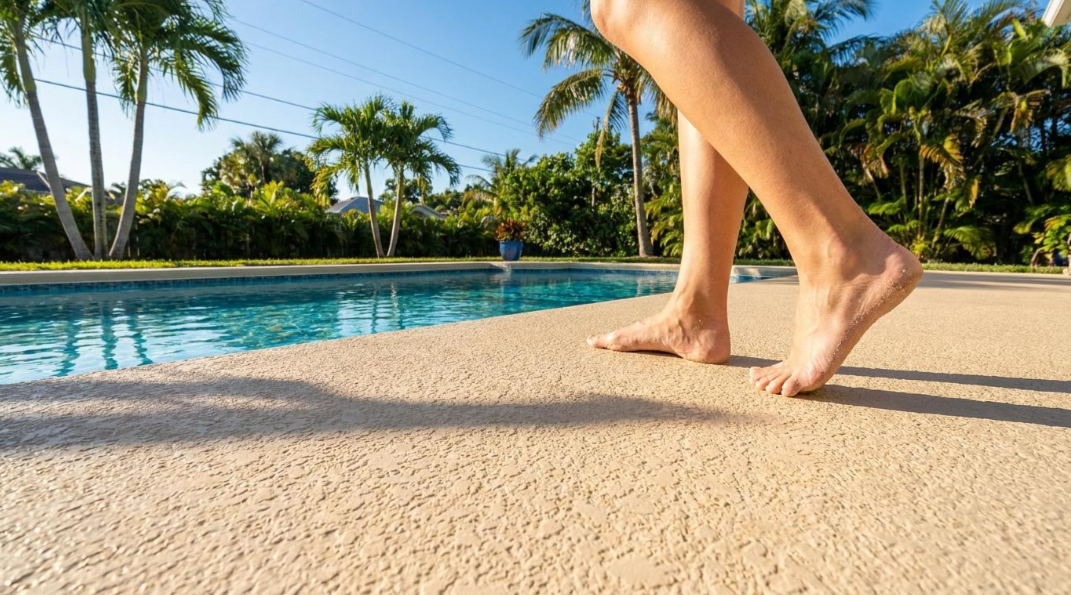
Age matters too. Pool decks older than 15 years in Tampa's climate have undergone thousands of thermal cycles and sustained UV exposure, degrading the concrete's surface layer. At that point, resurfacing with a cool deck coating or polyaspartic system costs $3 to $8 per square foot and delivers a new surface with slip resistance, heat reduction, and a manufacturer-rated lifespan of 10-plus years. Patching a deteriorating deck saves money initially but is likely to double your total spend within three years.
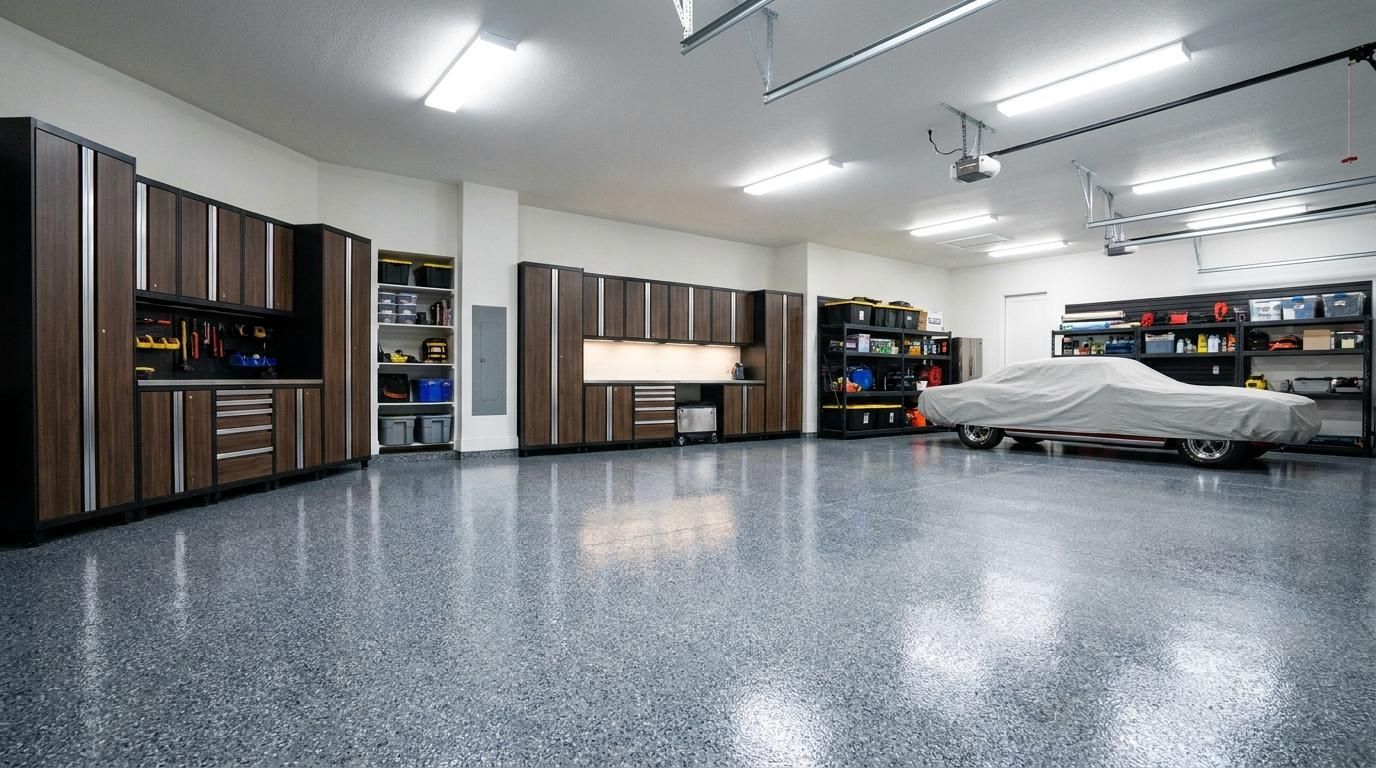
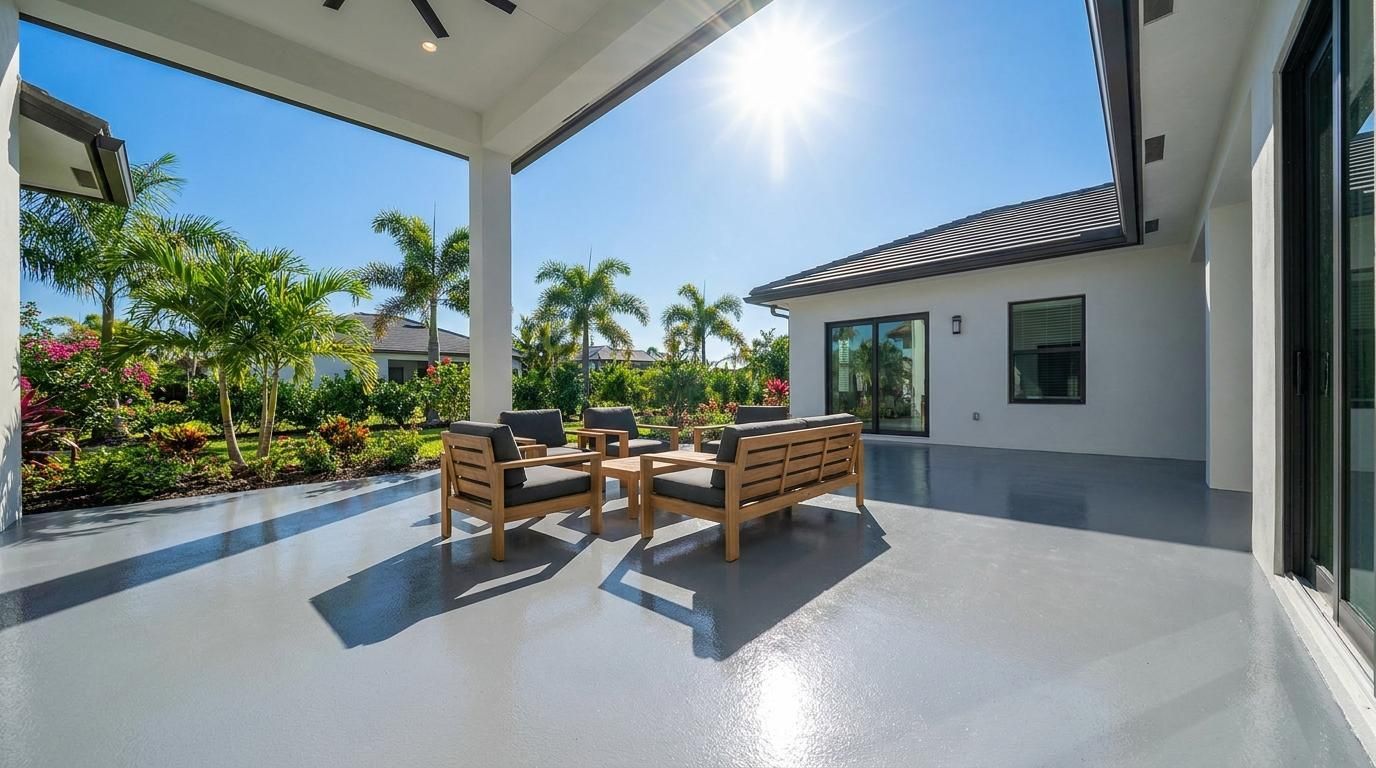
For homeowners considering their full range of options, our residential services page outlines coating systems designed for Florida's outdoor surfaces, including patios, garages, and pool decks.
Frequently Asked Questions
How long does a pool deck patch last in Florida?
A properly applied polymer-modified patch on an isolated crack lasts 3 to 5 years in Tampa's conditions. Patches on cracks caused by ongoing soil settlement or root pressure fail sooner because the underlying movement continues. Concrete Surface Pros inspects the subgrade before recommending a patch to confirm that the cause has stabilized.
Can I patch pool deck cracks myself?
Small hairline cracks under one-eighth inch can be filled with consumer-grade concrete crack filler from a hardware store. Anything wider, deeper, or near the pool coping requires professional evaluation because improper repairs trap water inside the slab and accelerate spalling in Florida's freeze-free but moisture-heavy climate.
Does resurfacing fix structural cracks in a pool deck?
Resurfacing covers and stabilizes surface-level cracking but does not repair structural failures like slab heaving or deep settling cracks wider than a quarter inch. Those require slab leveling or mudjacking before any coating goes on top. Our full service offerings include an evaluation to determine whether structural work is needed before resurfacing.
Choose the Repair That Actually Lasts
The choice between patching and resurfacing comes down to how much of the deck is damaged, what's causing the cracks, and how many more years you want from the surface. A single stable crack near a joint can be patched. A web of cracks across a 15-year-old deck in Tampa's sun calls for resurfacing. Spending $400 on patches that fail in 18 months costs more than a $3,000 resurfacing job that lasts a decade.
Contact Concrete Surface Pros online or call (727) 420-9541 for a free pool deck evaluation. We'll identify what's causing your cracks and recommend the repair that actually solves the problem.