Is Epoxy Flooring Worth It? Pros, Cons, and ROI Guide (2026)

Elissa Merritt • May 29, 2026

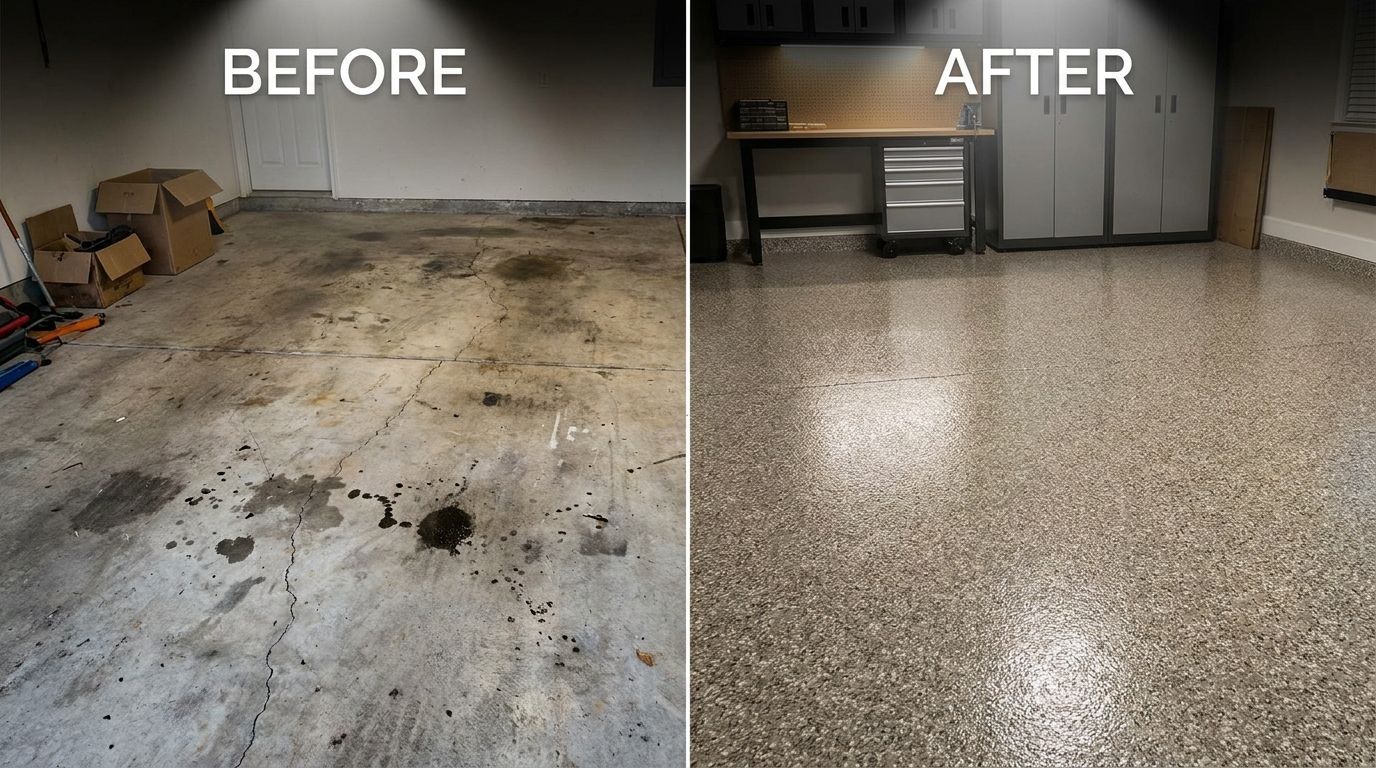
A standard two-car garage costs between $1,500 and $6,000 to coat with professional-grade epoxy yet the same homeowner often spends nearly the same amount reapplying DIY kits every two years over a decade. That gap between upfront sticker shock and long-term cost-per-year is where most Tampa homeowners get stuck when deciding whether epoxy garage floor coatings are worth the investment.

Concrete Surface Pros installs epoxy, polyaspartic, and decorative flake systems across Hillsborough, Pinellas, Manatee, and Hernando Counties, and we see exactly how these floors perform five, ten, and fifteen years after installation. This guide breaks down the real costs, verified ROI figures, honest drawbacks, and the specific conditions that make epoxy a strong return or a poor fit for your home.

What Epoxy Flooring Actually Costs in Tampa

Professional epoxy coating costs in the Tampa Bay area runs between $3 and $12 per square foot, depending on the system, surface condition, and prep work required. For a standard 400- to 600-square-foot two-car garage, that translates to roughly $1,500 to $6,000 installed.

Cost by System Type

  • Standard solid epoxy with polyurethane topcoat: $3 to $7 per square foot. Durable, chemical-resistant, and the most budget-friendly professional option.
  • Decorative flake system: $5 to $8 per square foot. Adds texture, color variety, and built-in slip resistance. The most popular choice for residential garages.
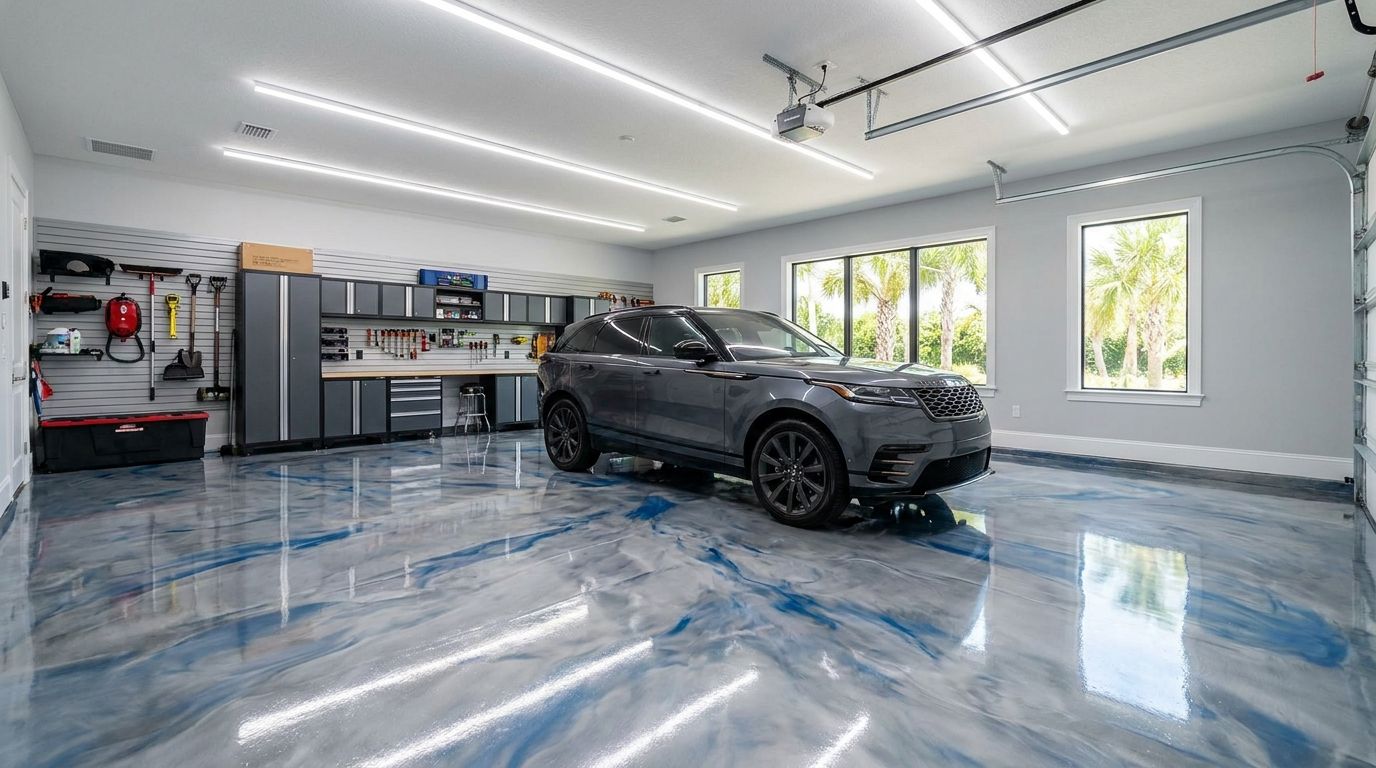
  • Metallic epoxy: $8 to $12 per square foot. One-of-a-kind marbled finishes with the same structural durability as standard systems.
  • Polyaspartic coating: $6 to $10 per square foot. UV-stable, fast-curing, and ideal for Florida garages exposed to direct sunlight.

DIY Kits vs. Professional Installation

Big-box DIY epoxy kits cost $1 to $3 per square foot upfront, but their typical lifespan in Florida's heat and humidity is just one to two years before peeling, yellowing, or hot-tire lift. Over a decade, a homeowner reapplying a DIY kit five times spends $2,500 to $5,000 — roughly the same as a single professional installation designed to last 15 to 20 years with proper maintenance.

How Long Professional Epoxy Lasts

A professionally installed epoxy system in a residential garage is designed to last 10 to 20 years depending on the coating type, surface preparation quality, and daily use. In Florida specifically, UV exposure and temperature swings make surface prep and topcoat selection more important than in moderate climates.

Lifespan by Coating Type

  • Standard epoxy with polyurethane topcoat: 5 to 10 years in high-traffic residential use
  • Polyaspartic systems: 15 to 20 years. UV-stable formula resists the yellowing that degrades standard epoxy in sun-exposed Florida garages
  • Decorative flake with polyaspartic topcoat: 15 to 20 years. The broadcast chip layer adds mechanical durability on top of chemical resistance

What Extends or Shortens the Lifespan

Diamond grinding before application is the single biggest factor in coating longevity. It creates a mechanical bond profile that prevents delamination, the primary failure mode for garage floor coatings. Skipping this step, which most DIY kits do, is the main reason budget coatings fail within two years.

The Real ROI: Does Epoxy Increase Home Value?

Industry data from multiple contractor surveys and home improvement aggregators puts the ROI on professional garage floor coatings between 60% and 80%. That means a $3,000 coating investment typically returns $1,800 to $2,400 in added home value, not counting the faster sale timeline and reduced buyer objections that a finished garage creates.

Why Buyers Notice Garage Floors

Real estate professionals report that homes with finished garage floors attract more serious offers and sell faster than comparable listings with bare concrete. A coated floor signals that the homeowner maintained the property, the same psychology behind fresh interior paint and updated landscaping. In Tampa's competitive housing market, that first impression matters when buyers walk through the garage entry.

When Epoxy Is Not Worth It

Epoxy is not the right investment in every situation. If you plan to sell within 12 months and the garage floor is in reasonable condition, the ROI window is too short to justify the cost. Floors with active moisture vapor transmission need moisture mitigation first, which adds $1 to $3 per square foot to the project. And if the concrete has severe structural damage beyond cosmetic cracks, resurfacing or partial replacement should happen before any residential concrete coating goes down.

Honest Pros and Cons for Tampa Homeowners

Advantages

  • Resists oil, chemicals, automotive fluids, and hot-tire pickup, the daily hazards Florida garage floors face.
  • Seamless surface eliminates grout lines and joints where moisture, mold, and bacteria collect.
  • Available in dozens of colors, flake blends, and metallic finishes to match any home style.
  • Professional systems include lifetime warranty coverage on materials and labor.
  • Low maintenance: regular sweeping and occasional mopping keep the surface in showroom condition.

Drawbacks to Consider

  • Higher upfront cost than DIY paint or bare concrete, even though cost-per-year is lower over a decade.
  • Standard epoxy can yellow under prolonged UV exposure. Polyaspartic topcoats solve this but add cost.
  • Requires 24 to 72 hours of cure time before vehicle traffic, depending on the system.
  • Not a fix for structural concrete problems: cracks wider than a quarter inch need repair first.
  • Slippery when wet unless a slip-resistant aggregate or textured flake system is specified.

Epoxy vs. Alternatives: How the Numbers Compare

Tampa homeowners weighing garage floor options typically compare epoxy to interlocking tiles , concrete paint, and polished concrete. Here is how the numbers line up for a 500-square-foot garage over 10 years.

  • Concrete paint: $0.50 to $2 per square foot, lasts 1 to 2 years. 10-year cost: $2,500 to $5,000 with reapplication.
  • Interlocking garage tiles: $3 to $8 per square foot installed, lasts 10 to 15 years. Moisture can trap underneath in humid climates.
  • Polished concrete: $3 to $8 per square foot, lasts 10 to 20 years. Durable but offers no chemical resistance without a sealer.
  • Professional epoxy: $3 to $12 per square foot, lasts 10 to 20 years. Best combination of chemical resistance, aesthetics, and long-term value.

Frequently Asked Questions

Is epoxy flooring worth the money?

For most Tampa homeowners, yes. Professional epoxy costs $3 to $12 per square foot and is designed to last 10 to 20 years, making the cost-per-year lower than concrete paint, bare concrete maintenance, or repeated DIY kits. The 60% to 80% ROI on resale adds further financial justification.

What are the downsides of epoxy flooring?

The main drawbacks are higher upfront cost compared to paint, potential UV yellowing with standard formulas, cure time of 24 to 72 hours before vehicle use, and slipperiness when wet unless a textured finish is applied. These are manageable with the right system selection. Polyaspartic topcoats address UV and cure time, while decorative flake adds slip resistance.

Does epoxy flooring increase home value?

Industry surveys show a 60% to 80% return on investment for professional garage floor coatings. A $3,000 installation typically adds $1,800 to $2,400 in perceived home value while helping the property sell faster in competitive markets like Tampa Bay.

Make the Numbers Work for Your Garage

Epoxy flooring is worth it when the math works, and for most Tampa homeowners investing in a professional-grade system, the math works well. Lower cost-per-year than every alternative, a 60% to 80% ROI at resale, and a floor that handles Florida's heat, humidity, and daily garage use for a decade or more.

Concrete Surface Pros installs epoxy, polyaspartic, and decorative flake garage floor systems across Hillsborough, Pinellas, Manatee, and Hernando Counties with lifetime warranty coverage and diamond-grinding surface preparation on every project. Call (727) 420-9541 or visit our contact page to schedule a free estimate and find out which system fits your garage and your budget.

By Elissa Merritt May 25, 2026
Discover the best commercial kitchen floor coating options for Tampa. See Florida health code requirements, costs, and which system fits your operation.
By Elissa Merritt May 21, 2026
See 3 decorative concrete patio ideas for Tampa weather: decorative flake systems, epoxy coatings, and resurfacing overlays. Check their costs & durability.
By Elissa Merritt May 18, 2026
Kool Deck resurfacing in Tampa costs $3-$5 per sq foot for patches. Modern cool deck and polyaspartic coatings last longer. Compare their costs & alternatives.
By Elissa Merritt May 15, 2026
Garage floor epoxy lasts 3-5 years in Tampa without UV protection. Professional systems with polyaspartic topcoats last 10-20 years. See their differences here.
By Elissa Merritt May 10, 2026
Explore 5 concrete patio makeover ideas for Tampa homeowners, from $2/sq ft stain-and-seal to decorative overlays. Compare costs and see what lasts in Florida.
By Elissa Merritt May 6, 2026
Epoxy flooring for restaurants in Tampa costs $4-$10/sq ft. See what Florida health codes require and which coatings last in commercial kitchens.
By Elissa Merritt May 2, 2026
Explore the 5 pool deck resurfacing options that Tampa homeowners choose most, from cool deck coatings to stamped overlays. Compare costs and climate benefits.
Tropical patio with wicker seating, fireplace, and lush palms surrounding a stone-tiled courtyard
By Elissa Merritt April 28, 2026
Explore 5 concrete patio resurfacing ideas for Tampa Bay homes. From decorative flake to cool deck coatings, find the right finish for Florida weather.
Garage interior with parked SUV, storage cabinets, and open view to a sunny driveway and garden.
By Elissa Merritt April 22, 2026
Compare polyaspartic and epoxy garage floor coatings based on cure time, UV resistance, durability, and cost. See which system wins in Tampa's climate.
Backyard swimming pool with clear blue water and a metal handrail by the shallow end
By Elissa Merritt April 15, 2026
Pool deck crack repair in Florida depends on the crack size, cause, and the deck's age. Learn when patching works and when full resurfacing is the smarter fix.
Show More