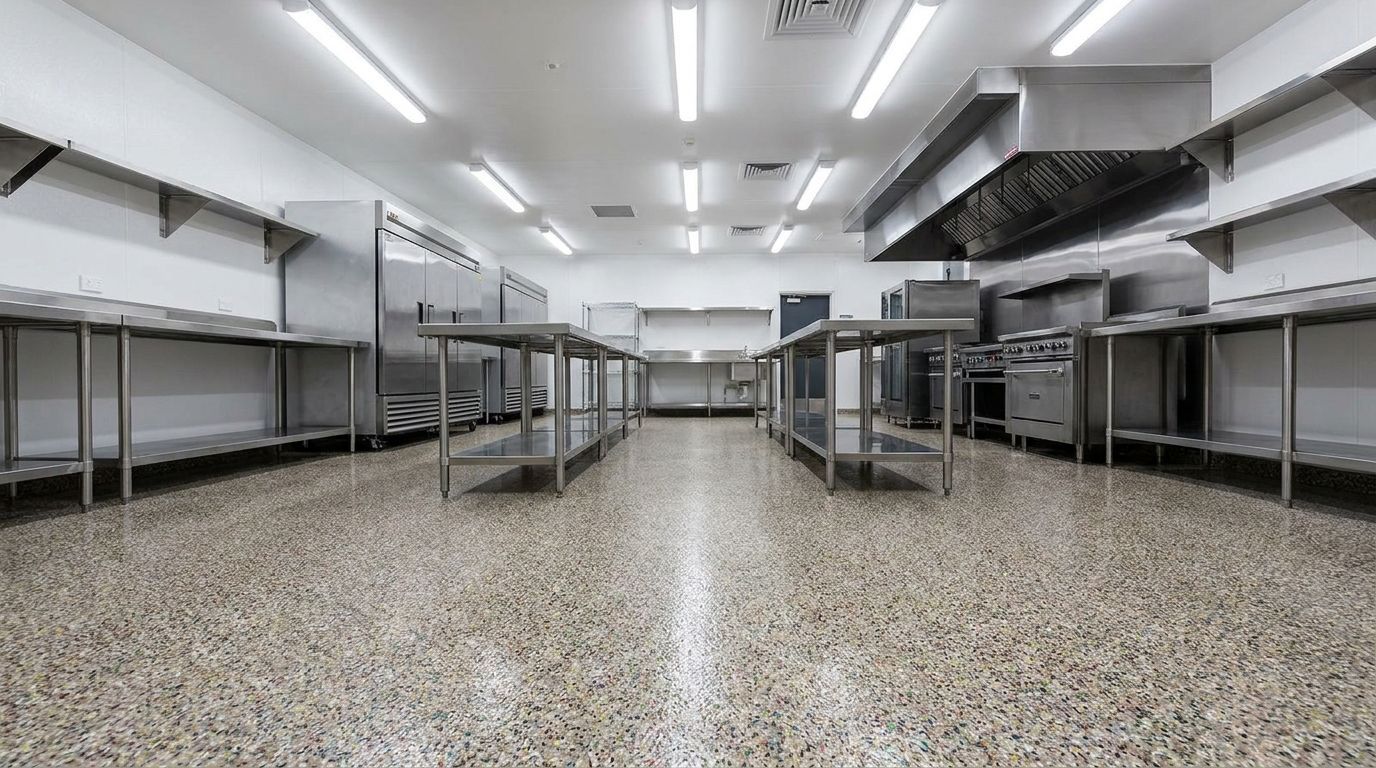

Best Commercial Kitchen Floor Coating Options for Food Service Businesses in Tampa
Commercial kitchen floor coating in Tampa must meet Florida health code standards for seamless, slip-resistant, chemical-resistant surfaces while surviving grease, thermal shock, and daily cleaning. Concrete Surface Pros installs commercial concrete coatings for restaurants, hospitals, hotels, and catering facilities across Tampa Bay.
After installing commercial kitchen floors across Tampa Bay, the most common failure isn't the wrong product. It's the wrong surface preparation. Kitchens that skip diamond grinding and moisture testing fail within 18 months regardless of which coating goes on top.
What Commercial Kitchen Floors Must Handle
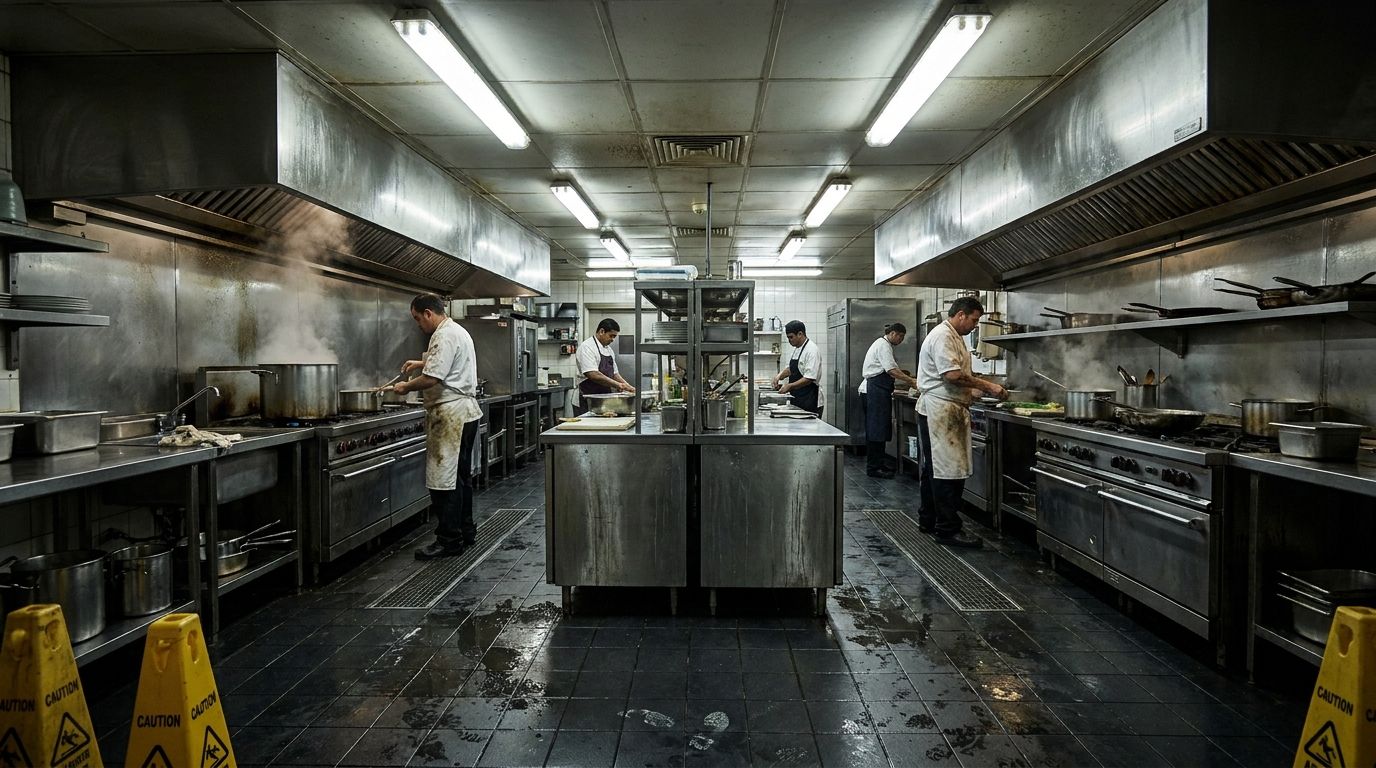
A commercial kitchen floor in Tampa faces a harsher daily cycle than almost any other floored environment.
- Thermal shock: boiling water, hot grease, and steam from dishwashers hit the surface dozens of times per shift, then cold rinse water follows
- Chemical exposure: commercial sanitizers, degreasers, and acidic food prep residue attack coatings that aren't rated for chemical resistance
- Constant moisture: standing water from floor drains, spills, and wash-down cycles keeps the surface wet for hours at a time
- Heavy traffic: kitchen staff, rolling carts, and dropped equipment create impact and abrasion damage daily
Tampa's year-round humidity adds a fifth factor: moisture vapor pressure from beneath the slab. Without a vapor barrier during installation, even the best coating will blister and delaminate within a year. Florida's Division of Hotels and Restaurants enforces floor standards during routine inspections, and a floor that doesn't meet code can result in violations that shut down service until repairs are completed.
Top Coating Options for Tampa Food Service
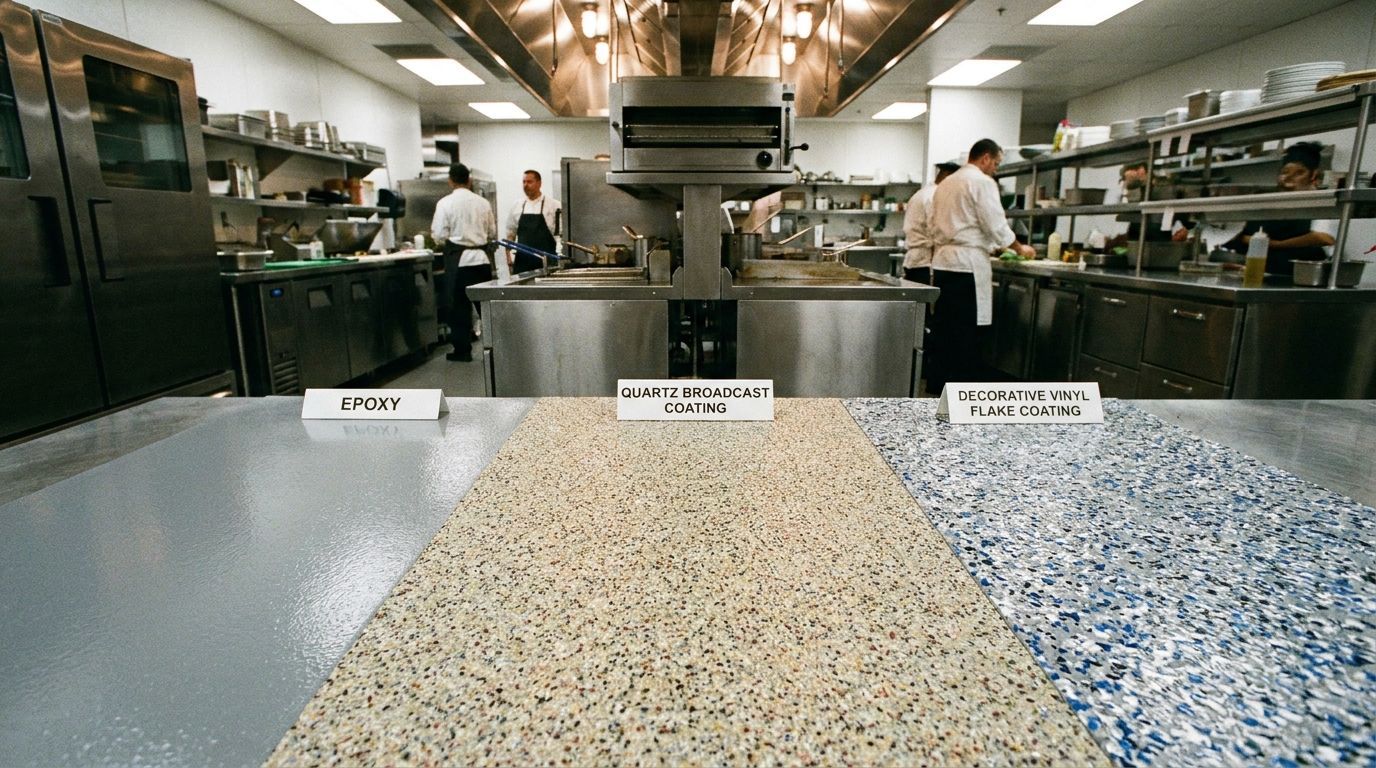
Three systems dominate commercial kitchen installations in Tampa. Concrete Surface Pros installs all three and specs the right one based on your kitchen's specific operational demands.
Epoxy with Polyurethane Topcoat
A thick epoxy base with a polyurethane topcoat provides chemical resistance, abrasion protection, and a seamless, nonabsorbent surface that meets Florida health code requirements. Cost runs $4 to $7 per square foot. Best for moderate-traffic kitchens with standard cleaning schedules.
Quartz-Broadcast Epoxy
Quartz aggregate broadcast into wet epoxy creates a heavily textured surface with the highest slip resistance of any coating system. Cost runs $6 to $9 per square foot. This is the go-to system for high-volume kitchens, dishwashing areas, and any wet-floor zone where staff safety is the top operational priority.
Decorative Flake with Chemical-Resistant Topcoat
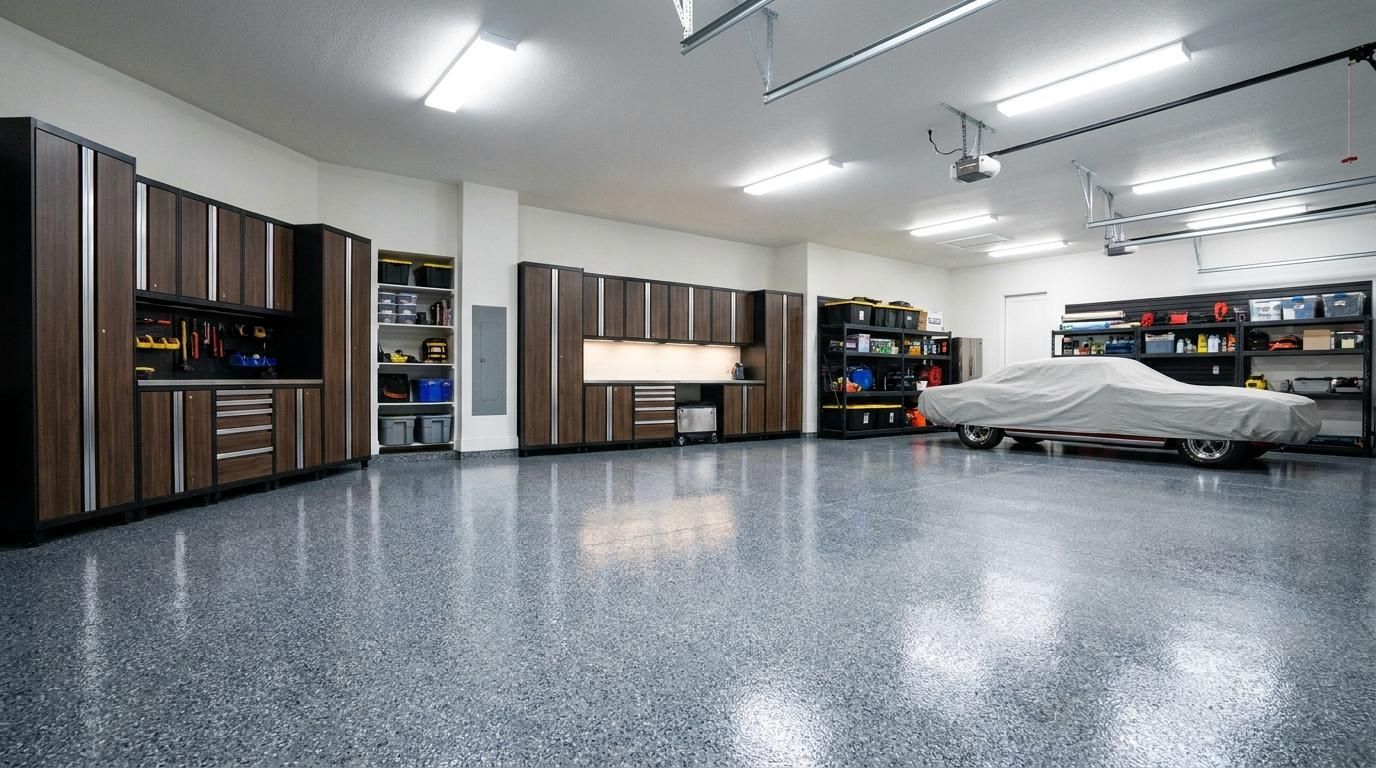
Flake systems offer moderate slip resistance and superior stain masking at $5 to $8 per square foot. Common in front-of-house areas like buffet lines, cafeteria dining rooms, and hotel breakfast areas where appearance matters alongside durability. For ongoing care of any of these systems, follow this epoxy flooring maintenance guide.
How to Choose the Right System
Start with three questions about your kitchen operation:
- How wet is the floor during service hours? Constantly wet floors need quartz-broadcast for slip resistance.
- How often do you clean with commercial-grade chemicals? Daily heavy cleaning demands polyurethane topcoats rated for chemical exposure.
- What does the space look like to customers? Customer-visible areas benefit from flake or decorative options that balance aesthetics with function.
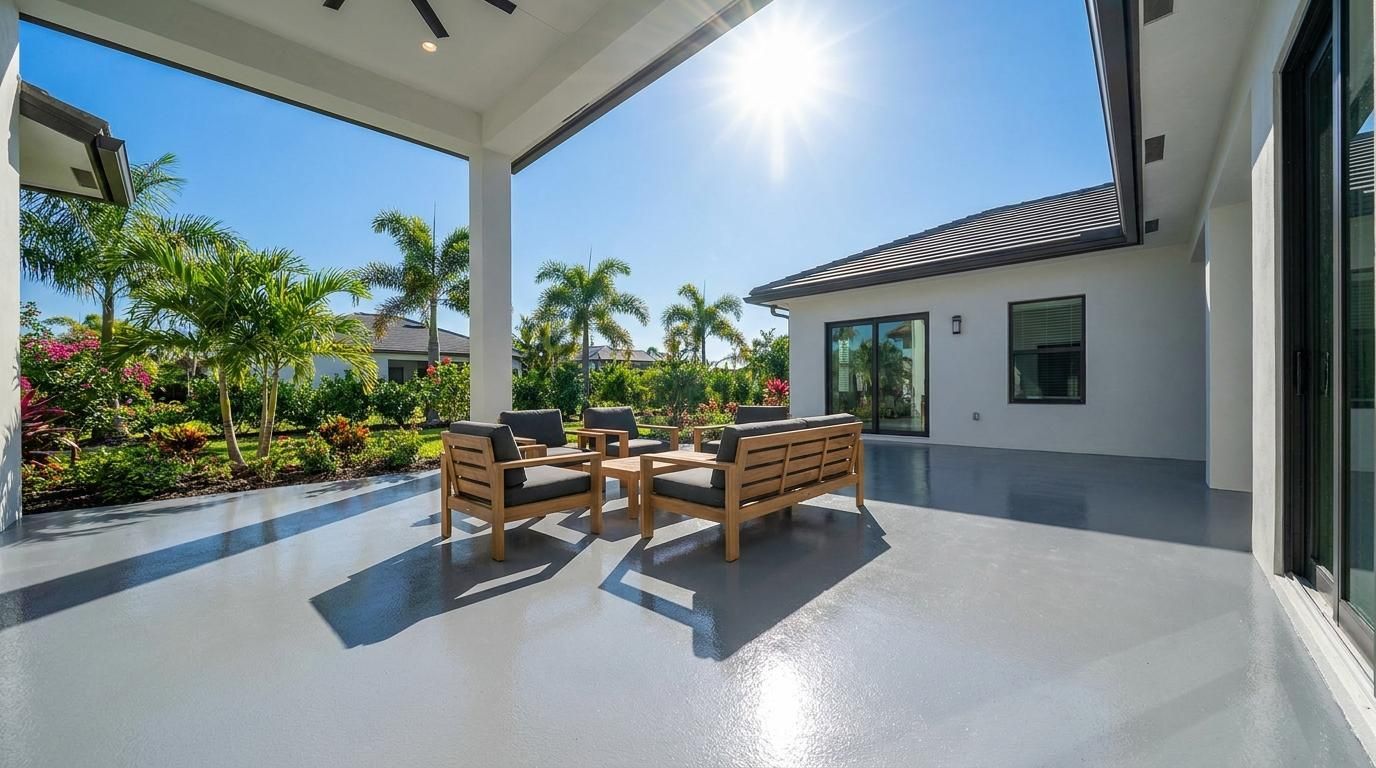
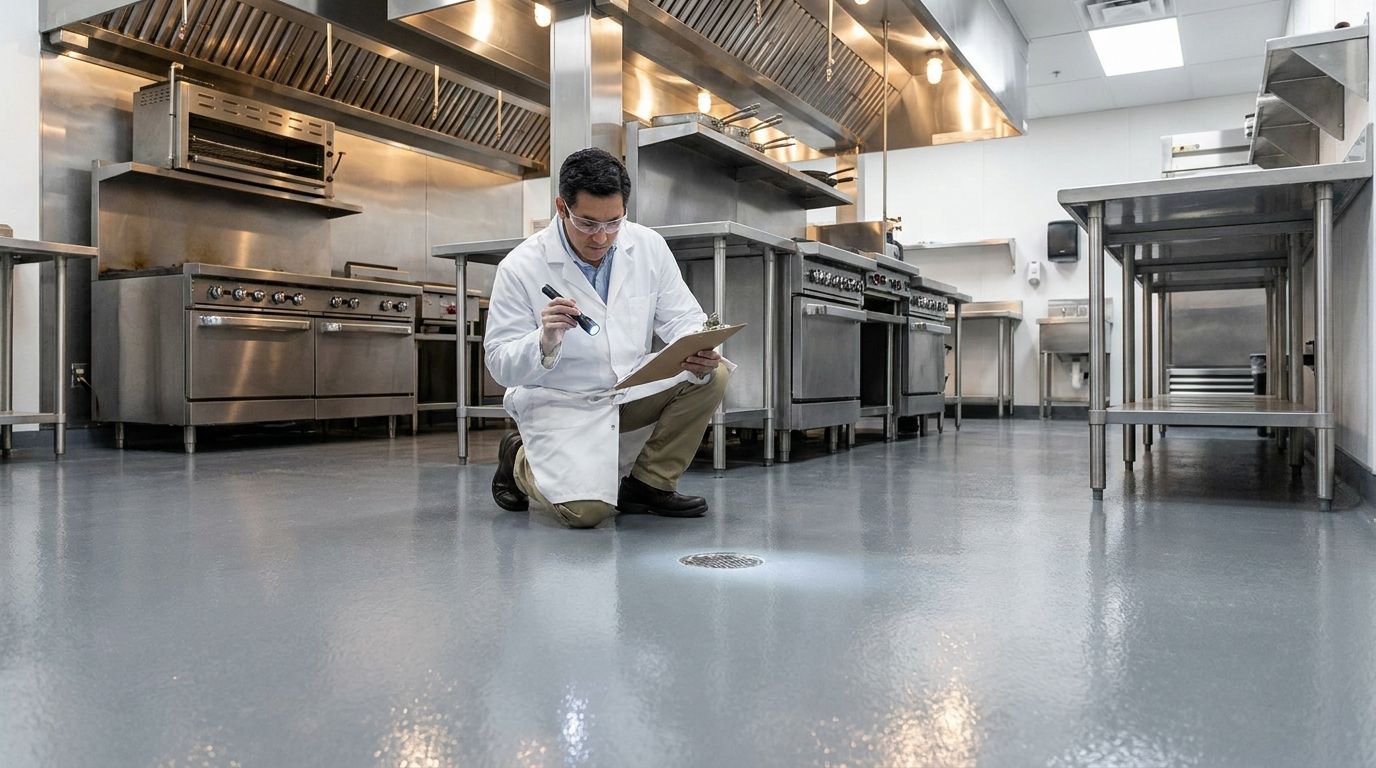
Beyond the coating itself, insist on diamond grinding for surface preparation and a moisture vapor test before any coating application. Tampa's humidity makes both steps mandatory. Concrete Surface Pros includes both in every commercial installation across Hillsborough, Pinellas, Manatee, and Hernando counties. If you're also considering coatings for home spaces like garages or patios, our residential concrete coatings use the same commercial-grade materials and preparation methods.
Frequently Asked Questions
What is the best floor coating for a commercial kitchen?
Quartz-broadcast epoxy provides the best combination of slip resistance, chemical durability, and ease of cleaning for commercial kitchens. It meets Florida health code requirements for seamless, nonabsorbent flooring and handles the thermal shock and moisture exposure that kitchen environments produce daily.
Does commercial kitchen epoxy meet Florida health code?
Commercial epoxy systems with anti-slip aggregate and a polyurethane topcoat meet Florida Administrative Code Chapter 61C-1 requirements for food service floors. These systems provide the seamless, nonabsorbent, slip-resistant surface that health inspectors require. Concrete Surface Pros specs every commercial kitchen floor for full code compliance.
How often should commercial kitchen floors be recoated?
A properly installed commercial epoxy system is designed to last 10 to 15 years before needing a full recoat. Annual inspections catch minor chips and wear spots that can be patched without recoating the entire floor. High-traffic zones near prep stations and dishwashing areas show wear first and may need spot repairs at the 5 to 7 year mark.
Lock In the Right Floor Before Your Next Inspection
The right commercial kitchen floor coating protects your staff, passes health inspections, and lasts a decade or more under the conditions that destroy lesser systems. The wrong one costs you twice: once to install and again to replace when it fails.
Concrete Surface Pros installs commercial kitchen flooring across Tampa Bay. Call (727) 420-9541 to schedule a free kitchen floor assessment for your food service operation.