
How To Fix Peeling and Cracks in Your Epoxy Floor: 4 Maintenance Tips

January 8, 2026

A professionally installed epoxy or polyaspartic floor is designed for extreme durability, but even the toughest surfaces can face challenges over time. Whether it’s a small chip from a dropped tool, a crack from concrete movement, or the dreaded peeling from a failed DIY job, knowing how to repair epoxy floor coating issues is essential for maintaining your investment.


Concrete Surface Pros not only installs stunning, long-lasting floors, but also understands the common issues that can arise. We’re here to guide you through the necessary maintenance and repair steps, ensuring your floor remains a source of pride for years to come.


The Root Cause: Why Do Epoxy Floors Fail?

Before attempting any repair, it’s vital to understand why the damage occurred. In our experience serving the Tampa Bay area, the vast majority of floor failures—especially peeling and delamination—stem from one critical issue: improper surface preparation.


In coastal Florida, elevated groundwater levels, sandy soil conditions, and seasonal humidity spikes increase the risk of moisture-related coating failures if testing and mitigation are skipped.


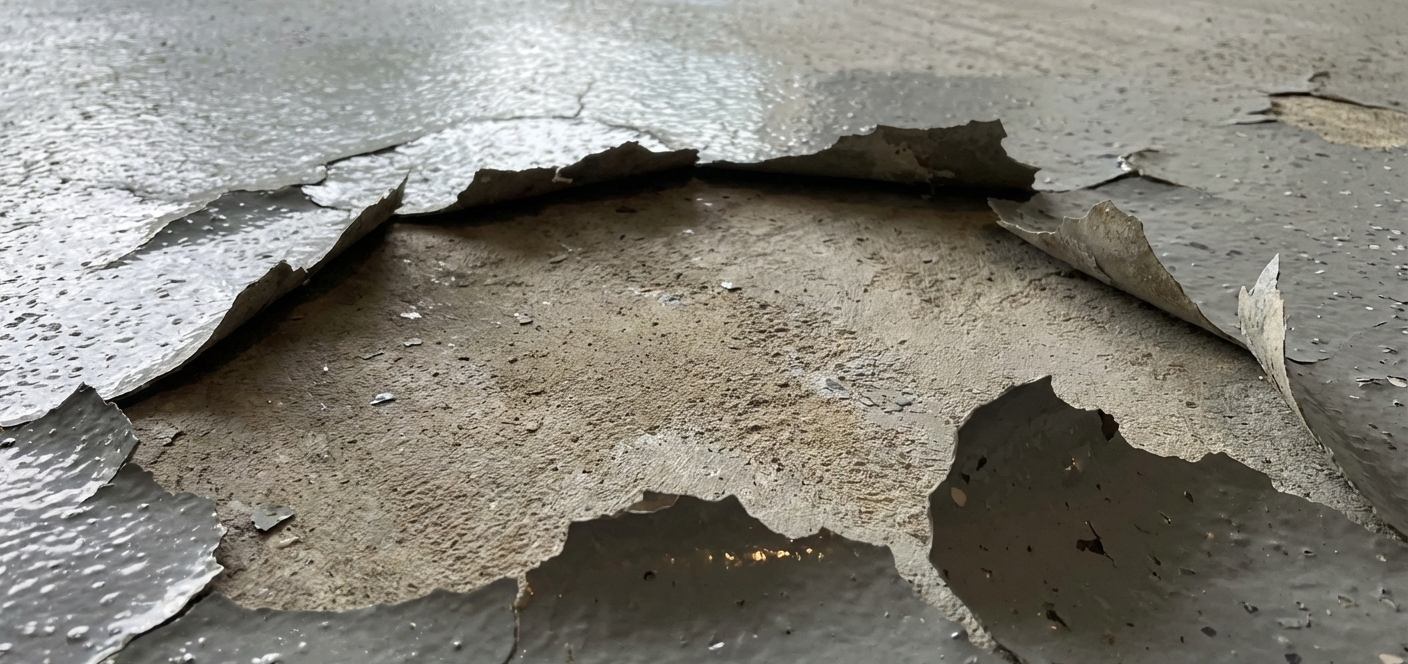
  • Peeling/Delamination: This almost always happens when the concrete wasn’t properly ground and profiled, or when moisture vapor transmission (MVT) wasn’t mitigated. As a result, the coating failed to form a strong mechanical bond with the concrete.
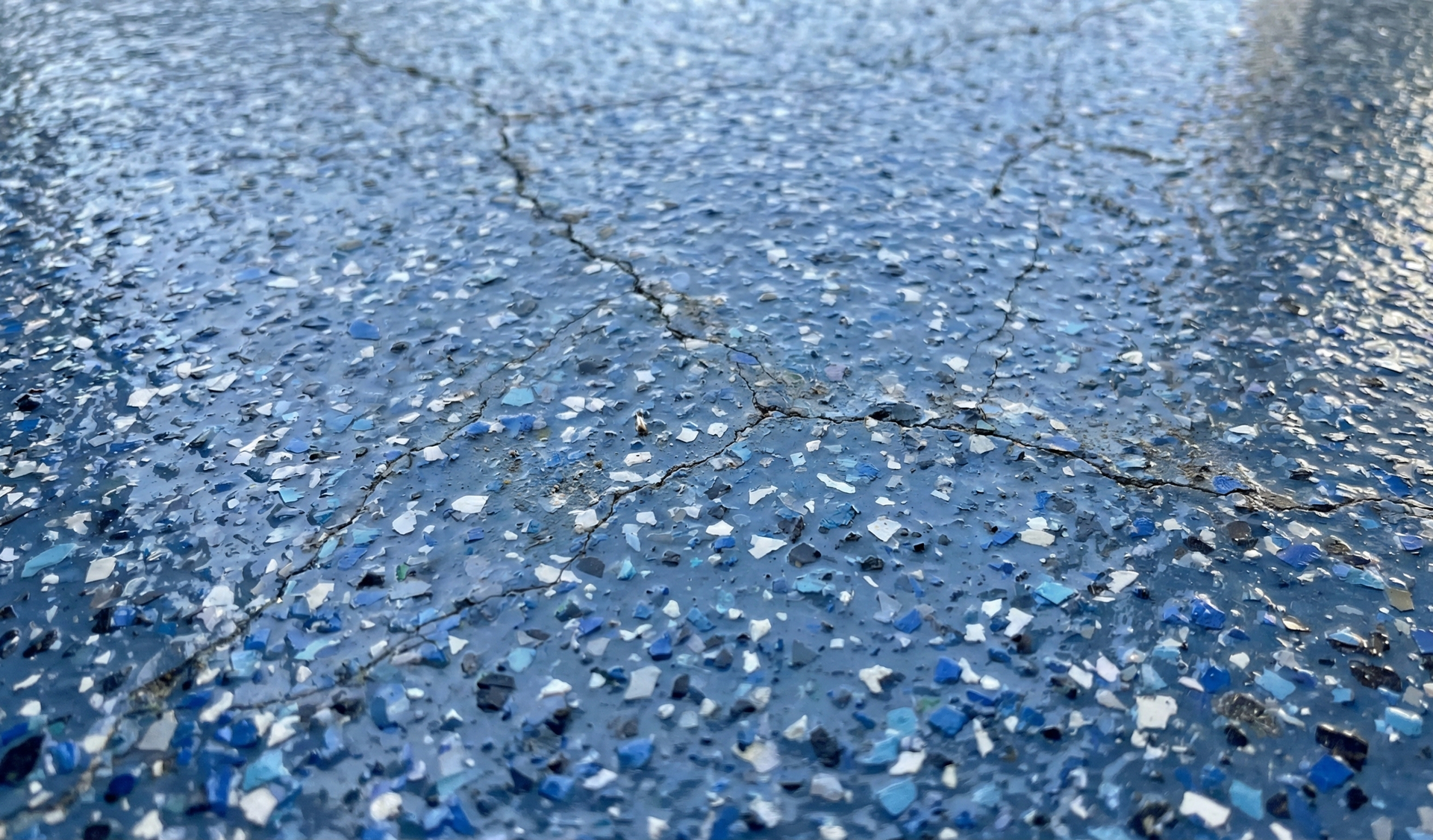
  • Cracking: This is usually a sign of movement in the concrete slab itself. Epoxy floor coating is rigid, so if the concrete below cracks, the coating will follow.
  • Bubbling/Blistering: This is often caused by trapped moisture or gases trying to escape the concrete after the coating has been applied.


Tip 1: Addressing Small Chips and Scratches

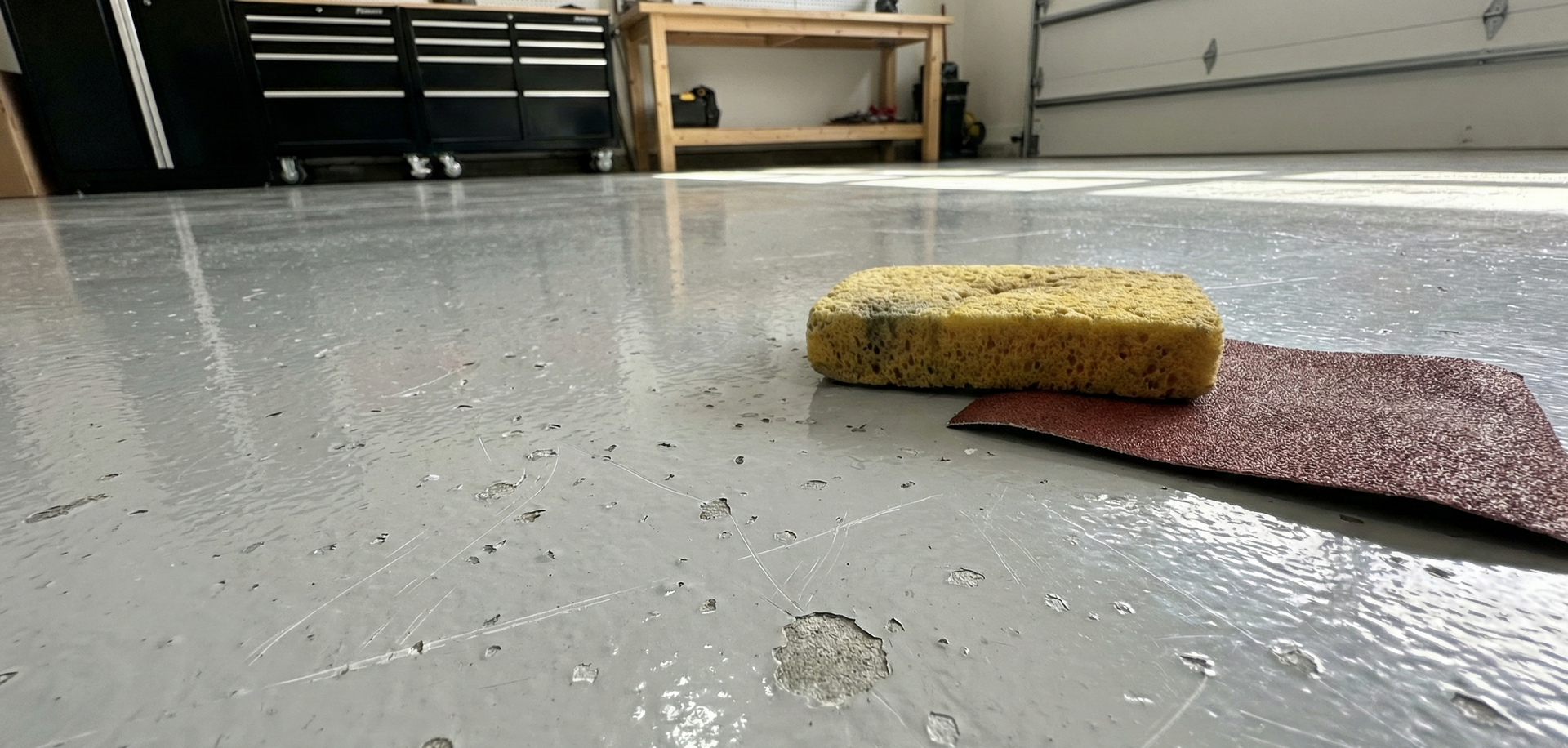
For minor surface damage, a simple patch can often be applied.

The Repair Process:


  1. Clean: Thoroughly clean the damaged area with a mild detergent and rinse completely.
  2. Prep: Lightly sand the edges of the chip or scratch to create a smooth transition.
  3. Patch: Use a small amount of a two-part epoxy repair kit, carefully matching the color and flake system if possible.
  4. Seal: Once cured, apply a small amount of clear top coat over the patch to blend it with the surrounding floor.


Tip 2: Fixing Cracks in the Concrete

Cracks require a more structural approach. If the crack is still moving, any repair will eventually fail.


The Repair Process:


  1. Widen and Clean: Use a V-groove grinder to widen the crack slightly and remove all loose debris.
  2. Fill: Inject a flexible, high-strength polyurea or epoxy crack filler into the groove. This material is designed to handle some movement.
  3. Grind: Once cured, grind the filler flush with the surrounding floor.
  4. Re-coat: Apply a small patch of the base coat and topcoat over the repaired area.


Tip 3: When Peeling Requires Professional Intervention

If large areas are peeling or bubbling, a simple patch will not suffice. This indicates a systemic failure of the bond, and the only long-term solution is often a complete redo.


The Professional Solution: We use our industrial-grade grinders to completely remove the failed coating, returning the concrete to a clean, profiled state. We then address the root cause—be it MVT or poor preparation—before applying our premium, high-solids system. Attempting to grind and re-coat a large area yourself is extremely difficult and messy, and often leads to further issues.


Tip 4: Preventive Maintenance for Longevity

The best way to avoid major repairs is through consistent maintenance.


  • Regular Cleaning: Use a soft-bristle broom and a mild, non-acidic cleaner. Avoid harsh chemicals that can dull the finish.
  • Immediate Spill Cleanup: Wipe up oil, chemicals, and other spills immediately.
  • Re-sealing: While our polyaspartic top coats are extremely durable, a high-traffic floor may benefit from a fresh clear coat every 5-10 years to restore its luster and protective layer.


When DIY Repairs Aren't Enough, Trust the Experts

For homeowners and business owners in the Tampa area, the decision to attempt a repair yourself or call a professional comes down to the extent of the damage and the original quality of the installation. If your floor was installed by us, we stand by our work. If you’re dealing with a failed DIY job, we have the expertise and equipment to fix it correctly.


Don't let a failing floor compromise the look and value of your space. Whether you need a small repair or a complete overhaul of your residential concrete coatings, Concrete Surface Pros is the trusted team you can turn to in the Tampa Bay region.


Contact us today for a professional assessment and let us restore your floor to its original, stunning condition.

February 5, 2026
Is tile or epoxy better for garage floors? Concrete Surface Pros compares their costs, durability, and maintenance to help you choose the right floor solution.
February 2, 2026
What's the best epoxy coating for garage floors? Tampa's concrete coating experts explain why professional polyaspartic systems beat DIY kits every time.
January 5, 2026
Learn how to install epoxy floor coating with our step-by-step guide. Discover the critical steps DIYers miss and why hiring pros is your best course of action.
December 4, 2025
Learn the most regrettable DIY garage floor coating mistakes and how to avoid them. Protect your floor and save money with pro tips from Concrete Surface Pros.
December 1, 2025
Stop guessing how much is epoxy floor coating and get the real numbers. We break down the factors that determine professional floor coating costs in Tampa, FL.
November 3, 2025
Let Concrete Surface Pros show you how to clean epoxy floor coatings to maintain their durability and beauty. Learn about routine cleaning tasks and more.
November 3, 2025
How much do garage floor coatings cost in Tampa? Make an informed decision by examining industry price ranges while weighing upfront costs vs long-term value.
October 1, 2025
What is epoxy floor coating, and why is it so popular in Tampa? Concrete Surface Pros lists its benefits, including durability, aesthetic versatility, and more.