How To Clean Your Epoxy Garage Floor: Cleaning Tips & Products to Avoid
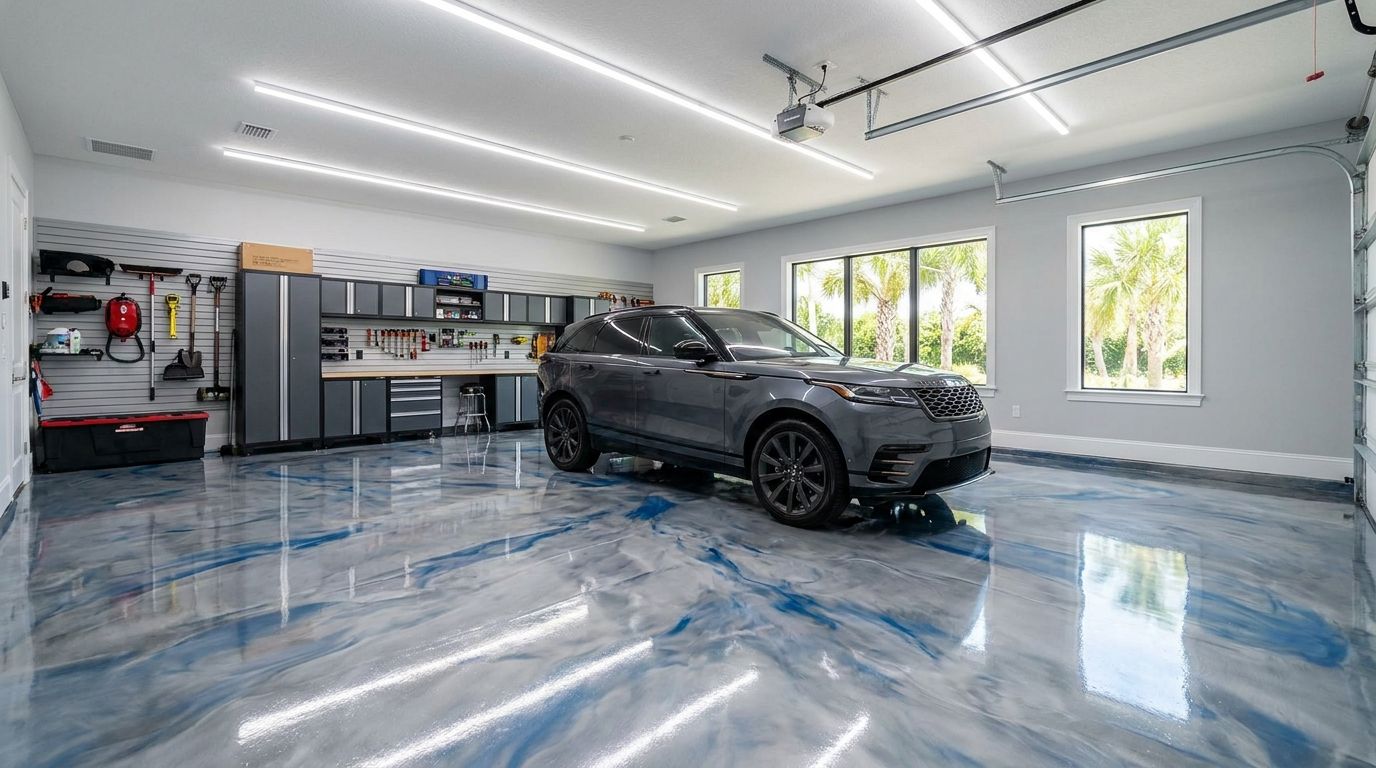
Cleaning an epoxy garage floor means using pH-neutral cleaners and avoiding products that degrade coatings faster than necessary. Garage floors face threats interior floors don't: motor oil, hot tire marks, and lawn chemicals. After installing countless coatings across Tampa Bay, Concrete Surface Pros has seen too many floors wear out early—not from poor installation, but from the wrong cleaning product.
Here's what many Tampa Bay homeowners assume: any all-purpose cleaner from the hardware store is safe for epoxy. It isn't. Citrus-based degreasers, bleach, and multi-surface sprays will slowly degrade an epoxy or polyaspartic topcoat. Though the damage won’t happen with a single use, you can count on it over a season. Garage floors in Hillsborough, Pinellas, and Manatee counties have one more variable working against them: Florida's year-round climate means those threats show up more frequently than in seasonal climates, with no winter break to slow the damage.

Products That Quietly Damage Epoxy Garage Floors

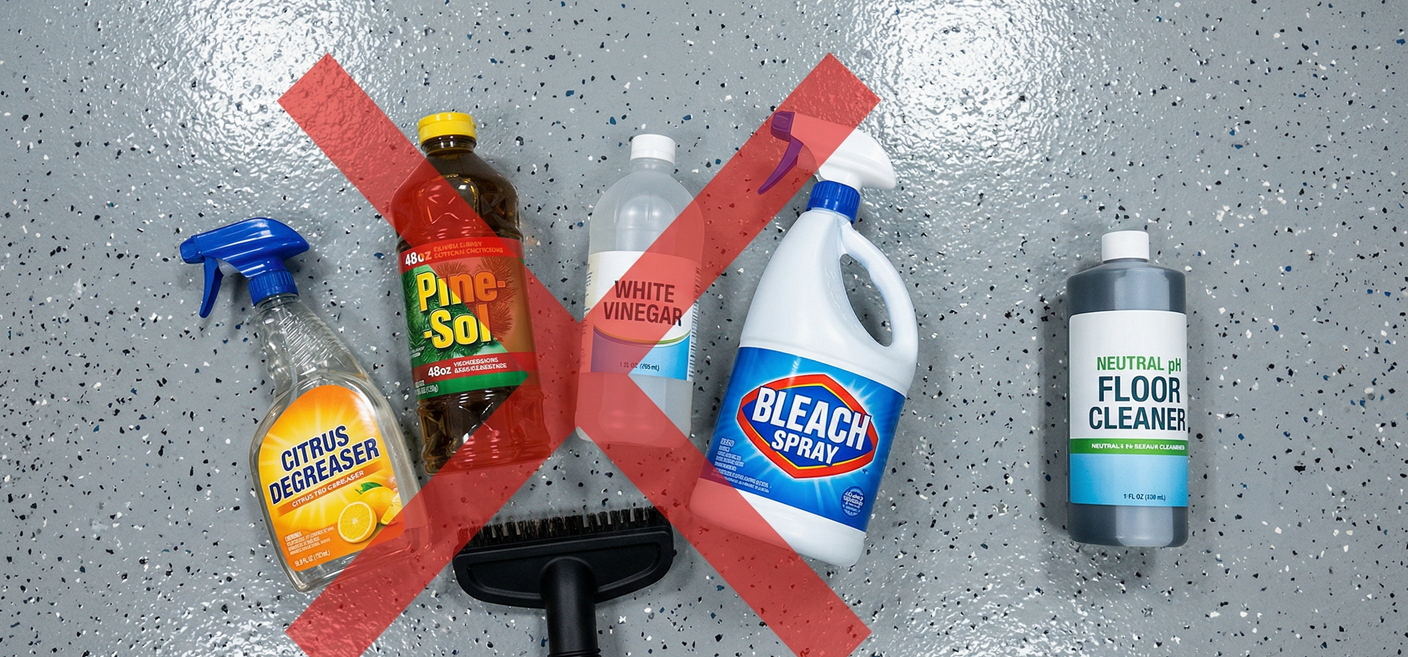
These products cause the most damage to epoxy garage floors:
- Citrus-based degreasers (typically pH 10 or higher). Alkaline enough to break down epoxy's surface chemistry with repeated use
- Vinegar and acidic cleaners etch the concrete surface the coating is bonded to, weakening adhesion over time
- Pine-Sol, Fabuloso, and similar multi-surface cleaners contain solvents that soften epoxy topcoats
- Bleach and ammonia-based products degrade resin bonds and cloud the surface over time
- Steam mops soften polyaspartic topcoats and accelerate wear patterns
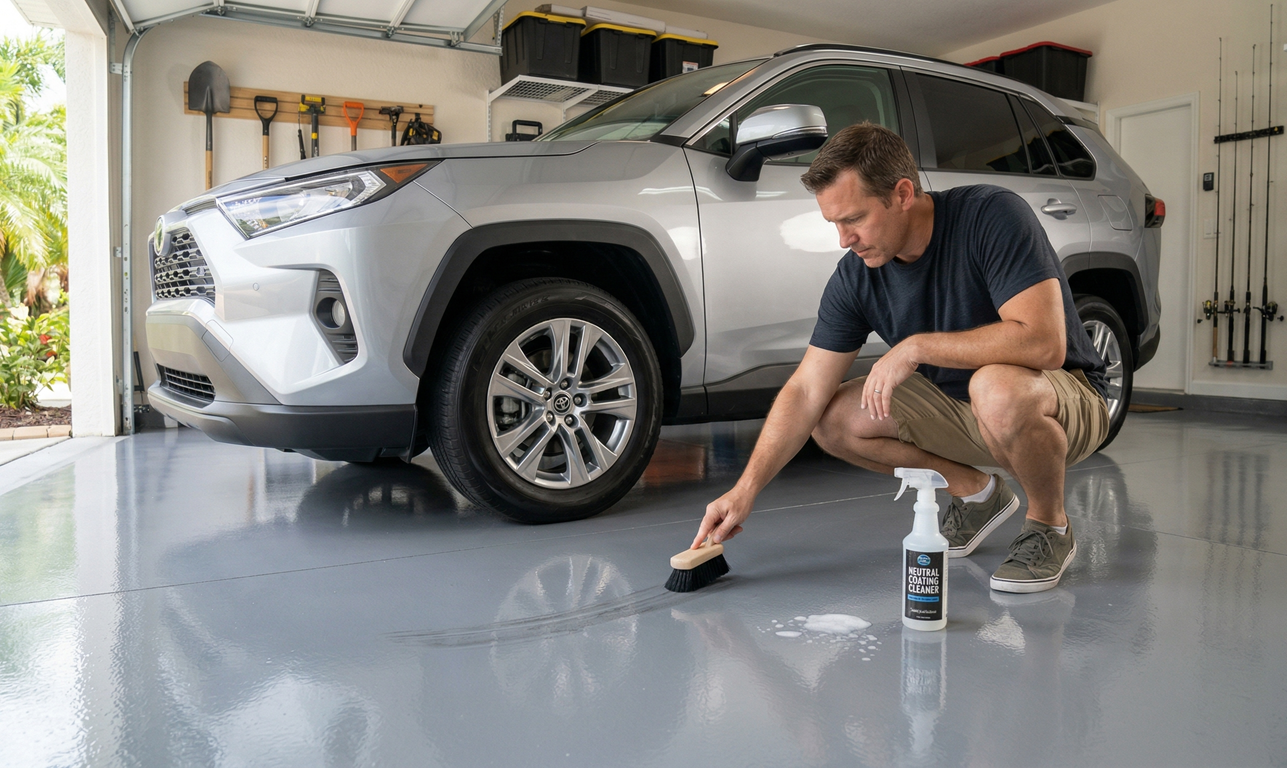
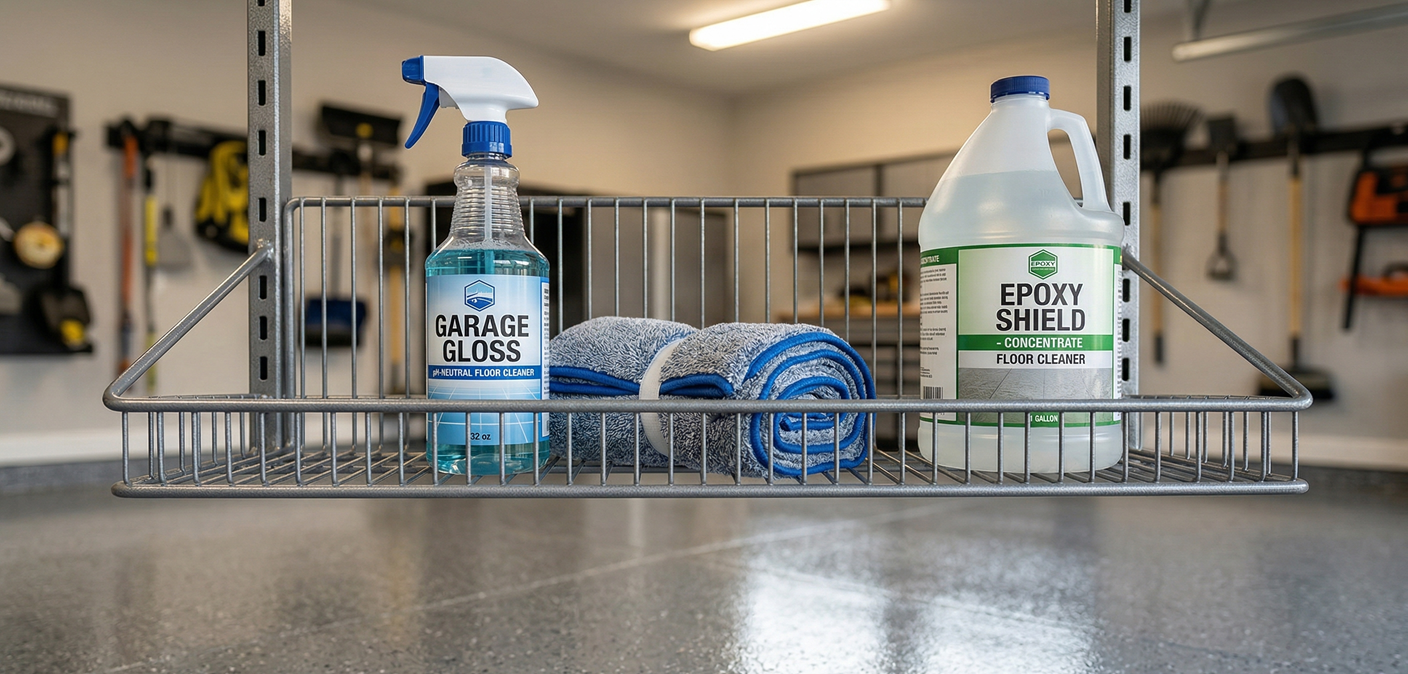
A pH-neutral cleaner (pH 6-8) diluted in warm water is the safe standard, applied with a soft-bristle brush or microfiber flat mop. Standard epoxy is more sensitive to alkaline cleaners than polyaspartic systems, but pH-neutral is safe for both.
Garage-Specific Threats and How to Handle Each One

Garage floor coatings face threats interior floors don't, and each one needs a specific response.
Hot Tire Marks
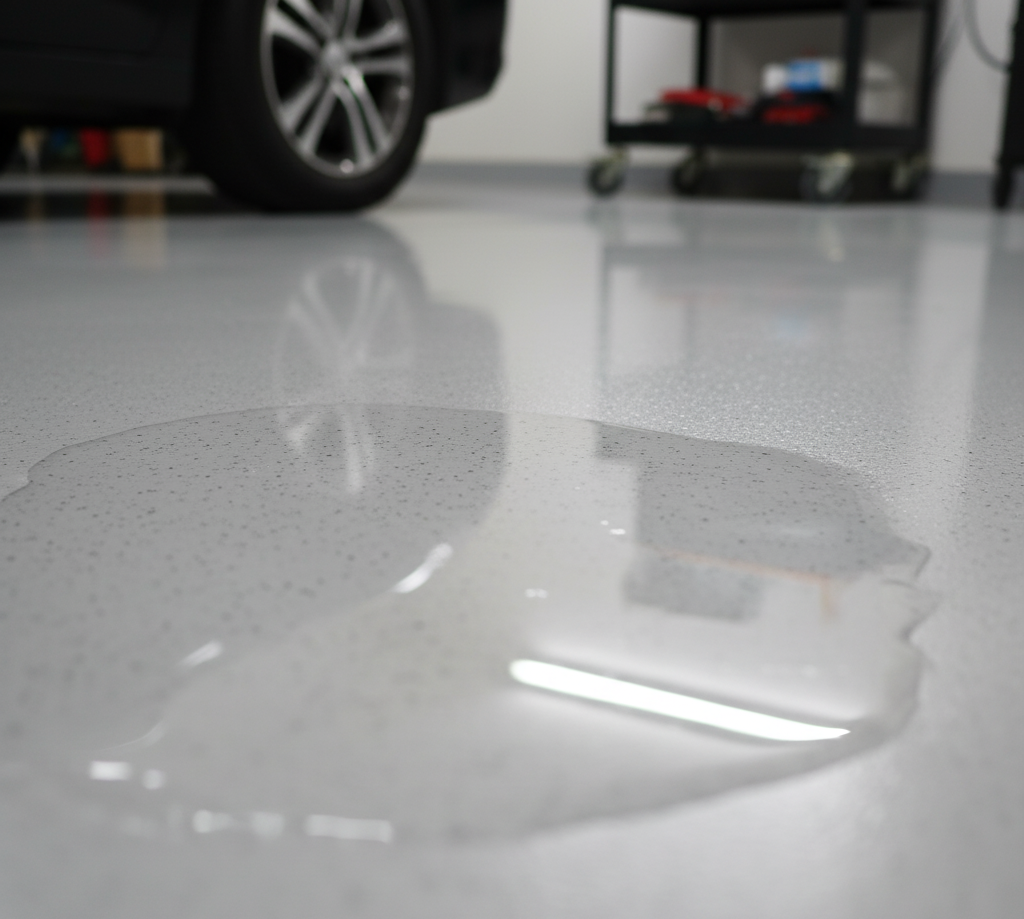
Hot tire pickup happens when tires cool on a coated surface, bonding tire plasticizers to the topcoat. These marks look like stains but are actually a material transfer. Apply a pH-neutral degreaser, let it dwell two to three minutes, then rinse. Scrubbing without dwell time spreads the mark. Polyaspartic topcoats resist this better than standard epoxy.
Motor Oil and Brake Fluid
Blot fresh oil with a clean rag; wiping spreads it. For stains that have set, a pH-neutral degreaser left to soak for five minutes usually lifts residue. Brake and transmission fluids are more aggressive and need to be rinsed immediately.
Fertilizer and Lawn Chemical Residue
Fertilizers and herbicides tracked in from neighborhoods like Westchase or Brandon contain compounds that react with epoxy when left to dry. Rinse the floor the same day after yard treatment or storing equipment inside.
A Florida Garage Cleaning Calendar

Florida humidity doesn't take a season off, which means garage floors here need a little more attention than the same floor would in Phoenix or Denver.
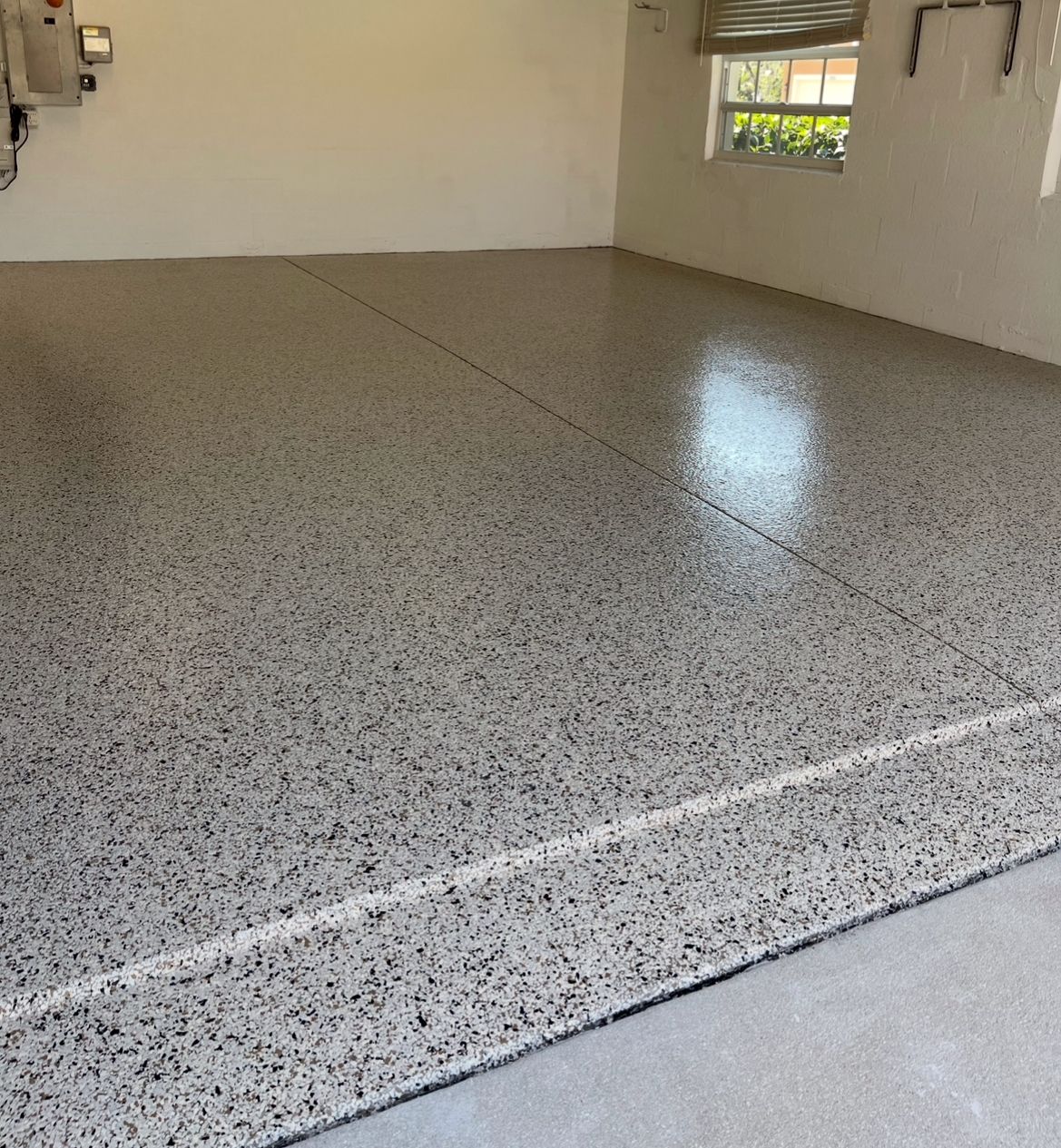
- Spring: Deep clean before storm season. Check slab edges for moisture haze. Hazing is easier to address in spring before summer humidity peaks.
- Summer: Rinse with a pH-neutral cleaner every seven to ten days. Rain tracked in carries road film and petroleum residue that builds up fast.
- Fall and Winter: Florida's dry season brings heavier fertilizer use. Tracked-in lawn chemicals are the most overlooked coating threat during cooler months.
If cleaning reveals peeling or delamination, that's a repair issue. See our guide on fixing peeling and cracks in epoxy floors for what to do next.

Frequently Asked Questions

Can I use a pressure washer on my epoxy garage floor?
Yes, but within certain limits. Keep the pressure below 1,500 PSI with a wide fan tip held at least 12 inches from the surface. Higher pressure concentrated in one area can lift the coating at its edges or chip the topcoat. Use cold water only. Hot water pressure washing introduces heat that softens polyaspartic topcoats over time.
How soon after installation can I clean my epoxy garage floor?
Most epoxy systems need a full seven days before receiving vehicle traffic or liquid cleaning. Polyaspartic coatings installed by Concrete Surface Pros typically cure faster and may be ready for light cleaning within 24 hours, but always confirm the cure timeline with your installer before applying any product to the surface.
What's the safest everyday cleaner for a Tampa Bay garage floor?
A pH-neutral cleaner diluted in warm water is the safest daily option for Tampa Bay garage floors. Avoid anything with citrus, ammonia, bleach, or solvents. Between deeper cleanings, a dry dust mop removes sand and grit that cause gradual surface abrasion—a common and preventable issue in Florida's sandy environment.
Keep the Right Products on the Shelf

Most floors that fade early weren't poorly installed; they were cleaned with the wrong products. Match your cleaner to your coating system, stick to pH-neutral products, and the floor you invested in should hold up the way it was designed to.
We serve homeowners across Tampa Bay in Hillsborough, Pinellas, Manatee, and Hernando counties. For a professional assessment on your floor's condition,
contact Concrete Surface Pros for a free consultation.