Epoxy Flooring for Restaurants: Key Considerations for Commercial Kitchens in Tampa
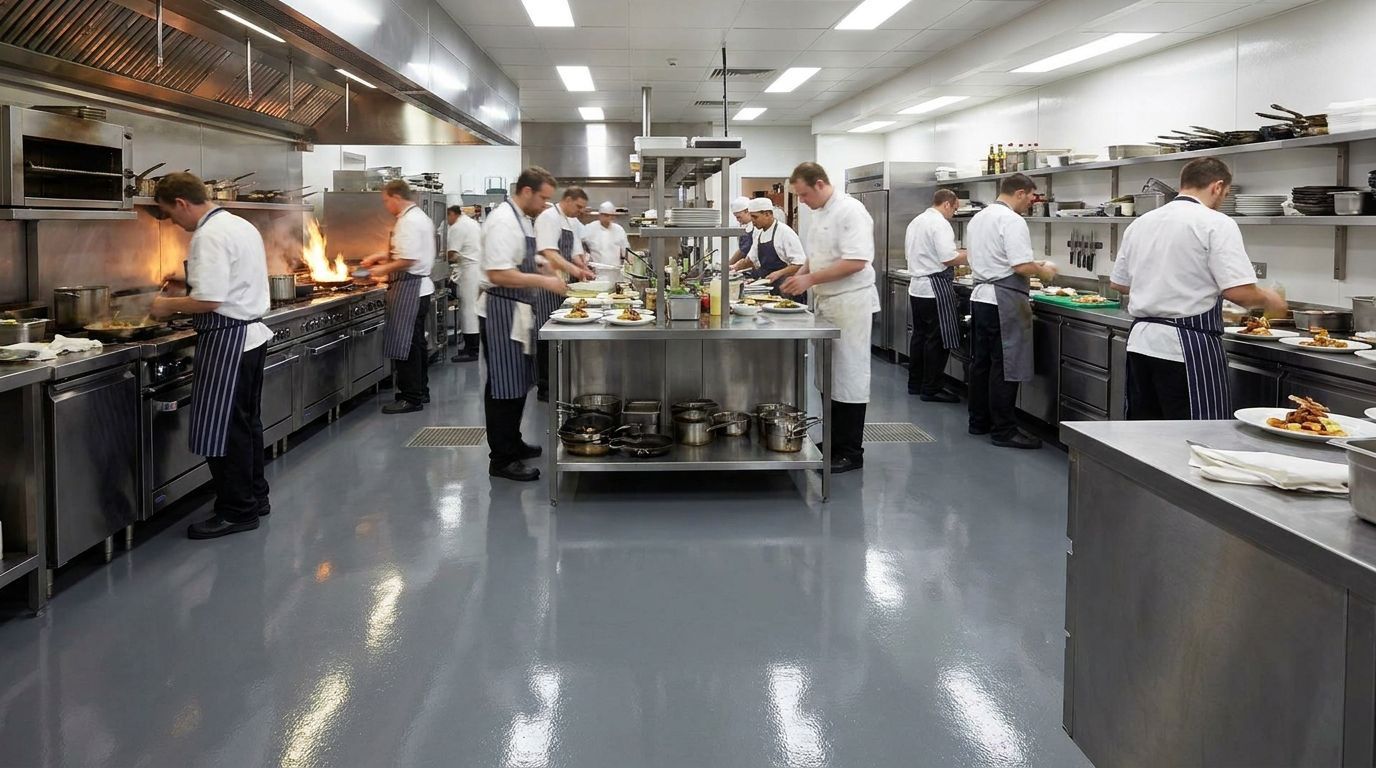
Epoxy flooring for restaurants in Tampa costs $4 to $12 per square foot installed, depending on the coating system and kitchen size. The right floor must handle grease, hot water, chemical cleaners, and heavy foot traffic while meeting Florida's health code requirements for seamless, slip-resistant surfaces. Concrete Surface Pros installs commercial concrete coatings in professional kitchens across the Tampa Bay metro.
A failed kitchen floor triggers health code violations, slip-and-fall liability, and unplanned closures during peak service months. A properly specced coating system addresses all three risks and performs for 10 to 15 years in commercial kitchen environments.
Why Restaurant Floors Fail in Tampa's Climate
Tampa's commercial kitchens face a combination of thermal shock, chemical exposure, and moisture pressure that generic floor coatings can't survive.
Thermal Shock
Kitchen floors absorb boiling water, hot grease, and steam from dishwashers dozens of times per shift. Standard epoxy cracks under repeated thermal cycling above 200°F. Tampa's already-warm ambient slab temperatures compound that stress, giving the coating less recovery time between thermal events.
Chemical Exposure
Sanitizers, degreasers, and acidic food prep residue attack coatings that aren't rated for chemical resistance. Florida health codes require floors that withstand daily cleaning with commercial-grade products, not the diluted household cleaners that residential coatings handle.
Moisture Vapor
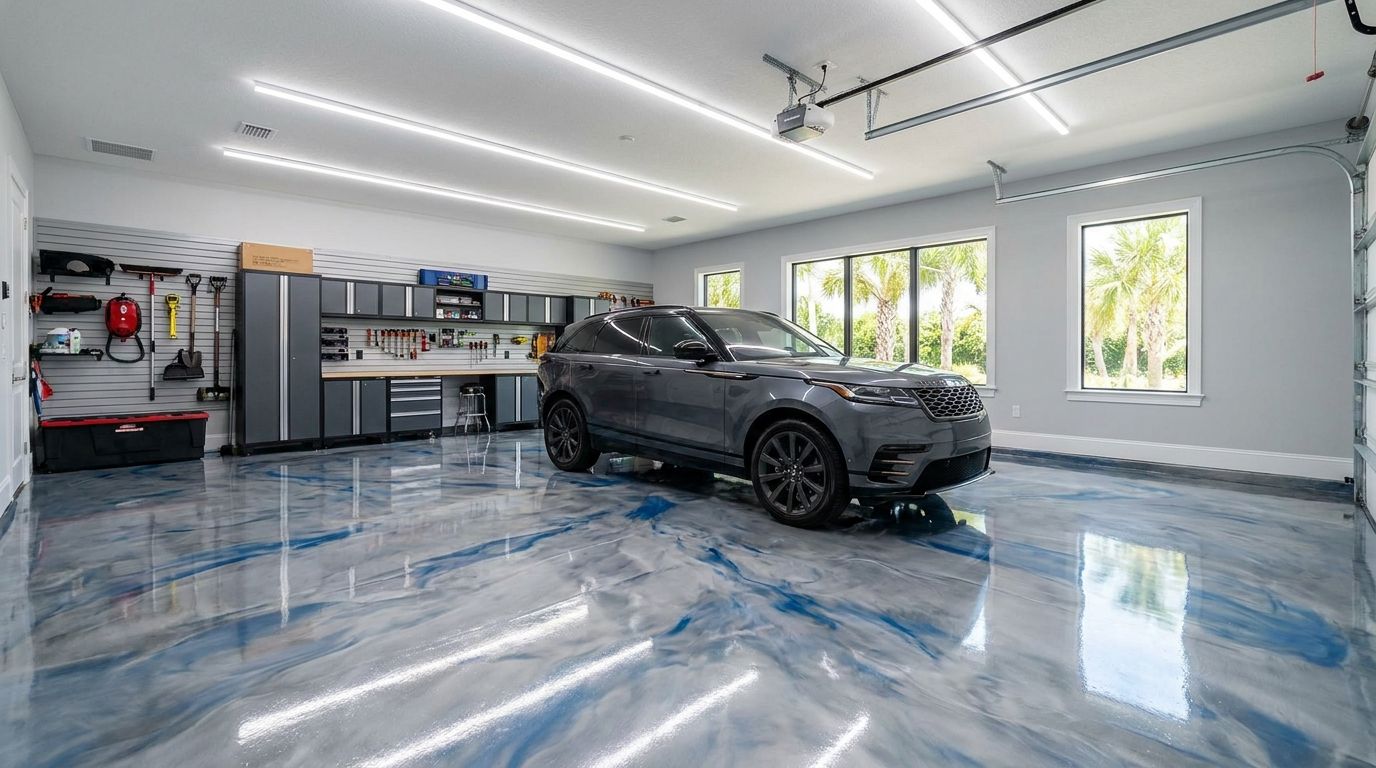
Tampa's high humidity drives moisture through concrete slabs from underneath. Without a proper vapor barrier and diamond-ground surface preparation, coatings delaminate within months. This is the same failure mechanism that destroys poorly installed garage floor epoxy in Tampa homes.
What Florida Health Codes Require
Florida Administrative Code Chapters 61C-1 and 61C-4, aligned with FDA Food Code standards, set specific floor requirements for commercial kitchens:
- Seamless and nonabsorbent: no cracks, joints, or porous surfaces that harbor bacteria
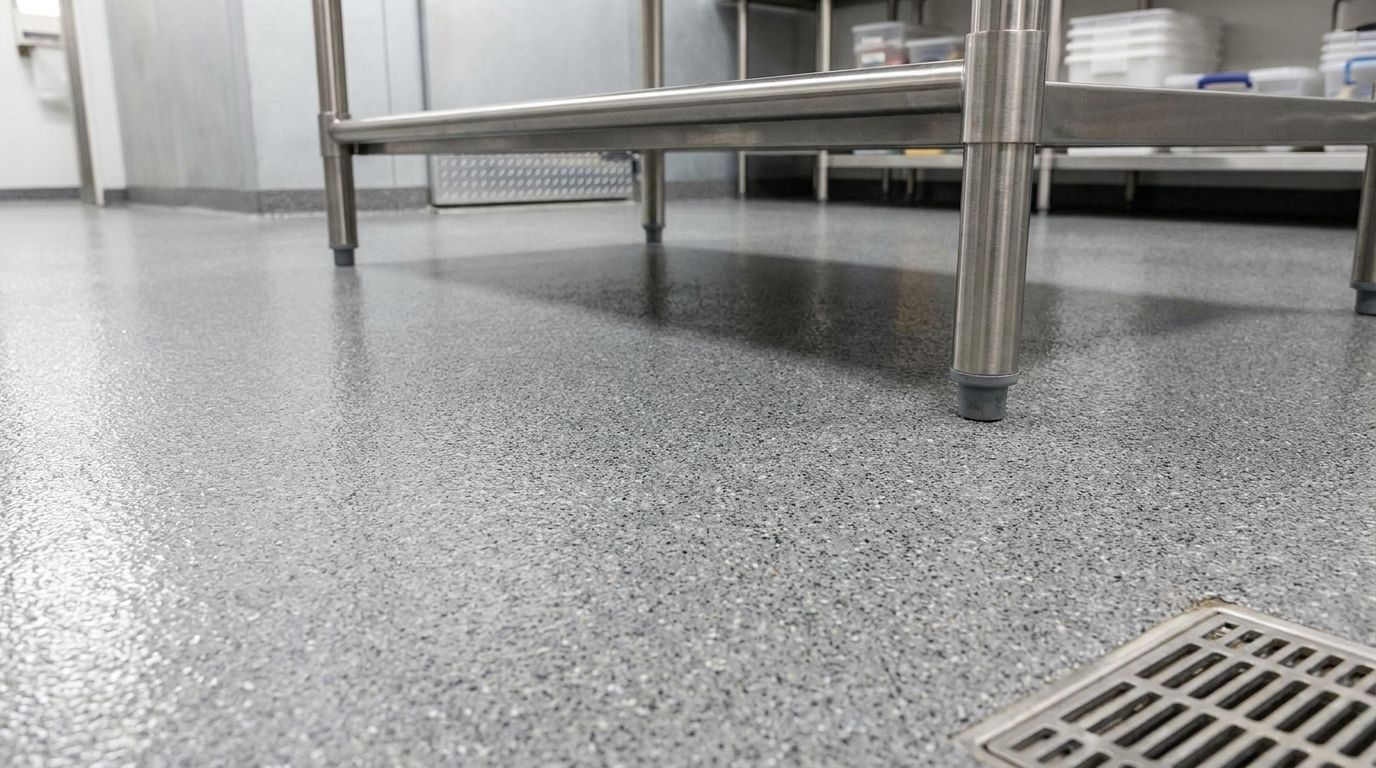
- Slip-resistant: coefficient of friction (COF) of 0.5 or higher when wet, the widely accepted industry minimum for commercial kitchen flooring
- Chemical and heat resistant: must withstand grease, hot water above 200°F, and daily sanitizer exposure
- Properly sloped: 1/8 to 1/4 inch per foot toward floor drains to prevent standing water
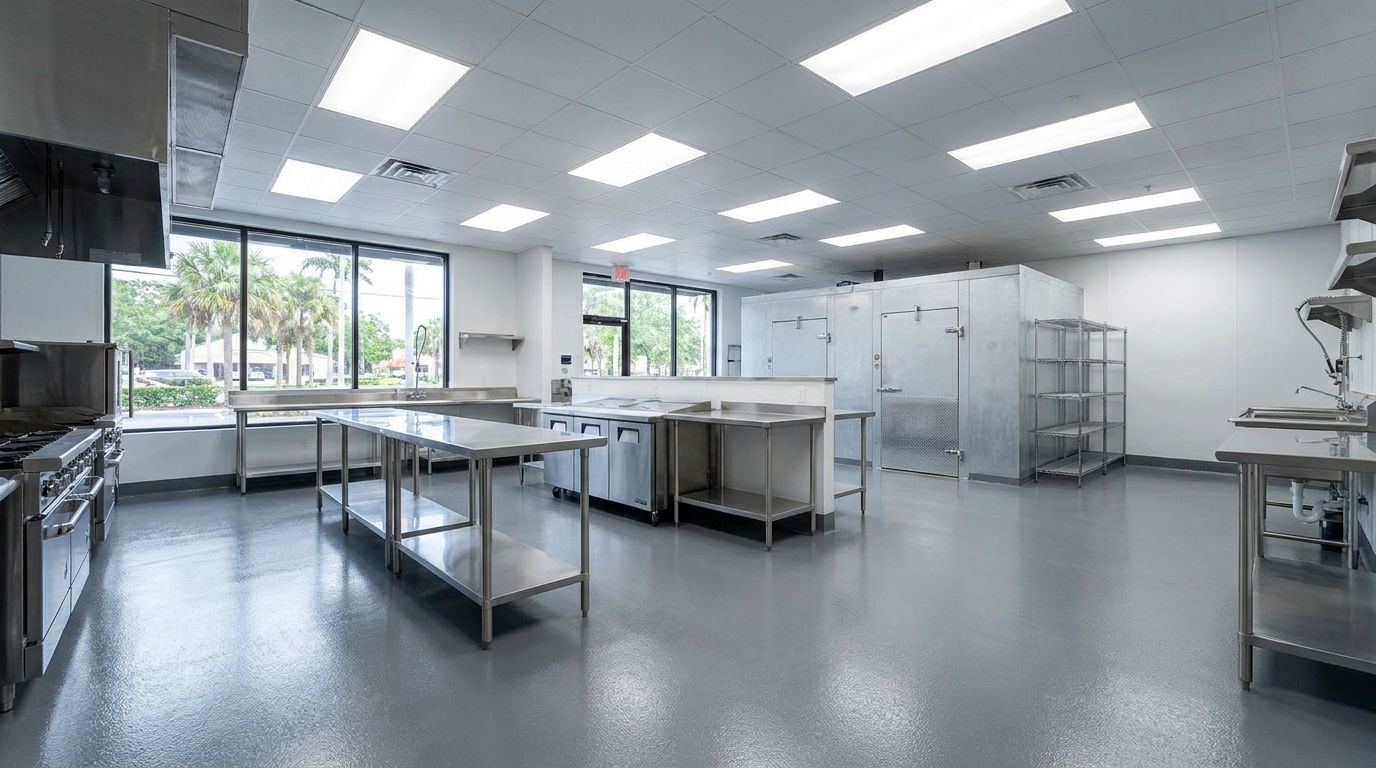
Standard residential epoxy doesn't meet these requirements. Commercial kitchen coatings need anti-slip aggregates, higher chemical resistance ratings, and proper moisture vapor barriers underneath the coating system. Tampa's year-round humidity makes that vapor barrier especially critical, because skipping it is the single most common reason commercial kitchen coatings fail in Florida.
Best Coating Systems for Commercial Kitchens
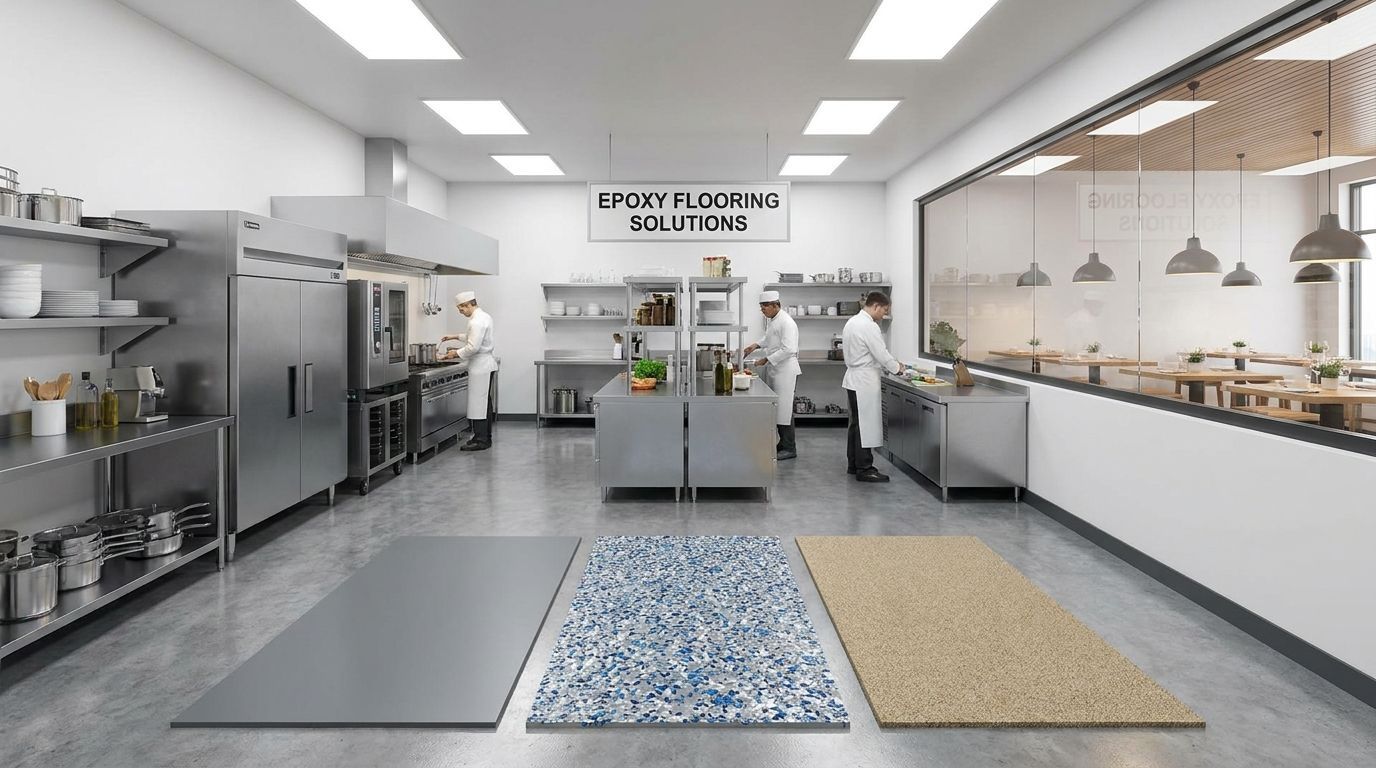
Three coating systems meet Tampa's commercial kitchen requirements. Each handles different operational demands, and Concrete Surface Pros installs all three.
Solid Epoxy with Polyurethane Topcoat
The most common commercial kitchen system: a thick epoxy base coat sealed with a polyurethane topcoat for chemical and abrasion resistance. Cost runs $4 to $7 per square foot installed. Works well in kitchens with moderate traffic and standard cleaning protocols. For a detailed pricing breakdown, see this epoxy floor coating cost guide.
Quartz-Broadcast Epoxy
Quartz aggregate broadcast into wet epoxy creates a heavily textured, slip-resistant surface with higher durability than standard solid color. Cost runs $7 to $12 per square foot. This system handles the heaviest foot traffic and provides the best traction in constantly wet environments like dishwashing stations and prep areas.
Flake or Chip Systems
Vinyl flake broadcast into epoxy provides moderate slip resistance and masks stains effectively. Cost runs $5 to $8 per square foot. Flake flooring is common in front-of-house restaurant areas where aesthetics matter alongside function. To maintain any of these systems between health inspections, follow a commercial epoxy maintenance protocol designed for food service environments.
Frequently Asked Questions
Is epoxy flooring safe for restaurant kitchens?
Epoxy flooring with the right topcoat and anti-slip aggregate meets Florida health code requirements and widely accepted commercial kitchen flooring standards. The key is specifying a system rated for wet conditions with a coefficient of friction of 0.5 or higher. Standard residential epoxy doesn't meet those standards. Concrete Surface Pros specs commercial-grade systems for Tampa food service operations.
How long does commercial kitchen epoxy flooring last?
A properly installed commercial epoxy system is designed to last 10 to 15 years in a restaurant kitchen, depending on traffic volume and cleaning frequency. Kitchens that follow manufacturer-recommended cleaning protocols and avoid harsh acids tend to get the full lifespan without major repairs or recoating.
How much does it cost to epoxy a restaurant kitchen floor in Tampa?
Restaurant kitchen epoxy in Tampa typically costs $4 to $12 per square foot installed. A 500-square-foot kitchen runs $2,000 to $6,000 depending on the system chosen. Solid epoxy sits at the low end while quartz-broadcast systems cost more. Surface preparation and moisture mitigation add $1 to $2 per square foot if the slab needs repair.
Pass Your Next Health Inspection With Confidence
A restaurant kitchen floor needs to pass health inspections, protect staff from slips, and survive years of thermal shock and chemical exposure without losing its grip or peeling off the slab. The coating system you choose determines whether you get that performance or face costly repairs within the first year.
Concrete Surface Pros installs commercial kitchen flooring across Tampa Bay. Call (727) 420-9541 to schedule a free kitchen floor assessment and get the right system specified for your space.