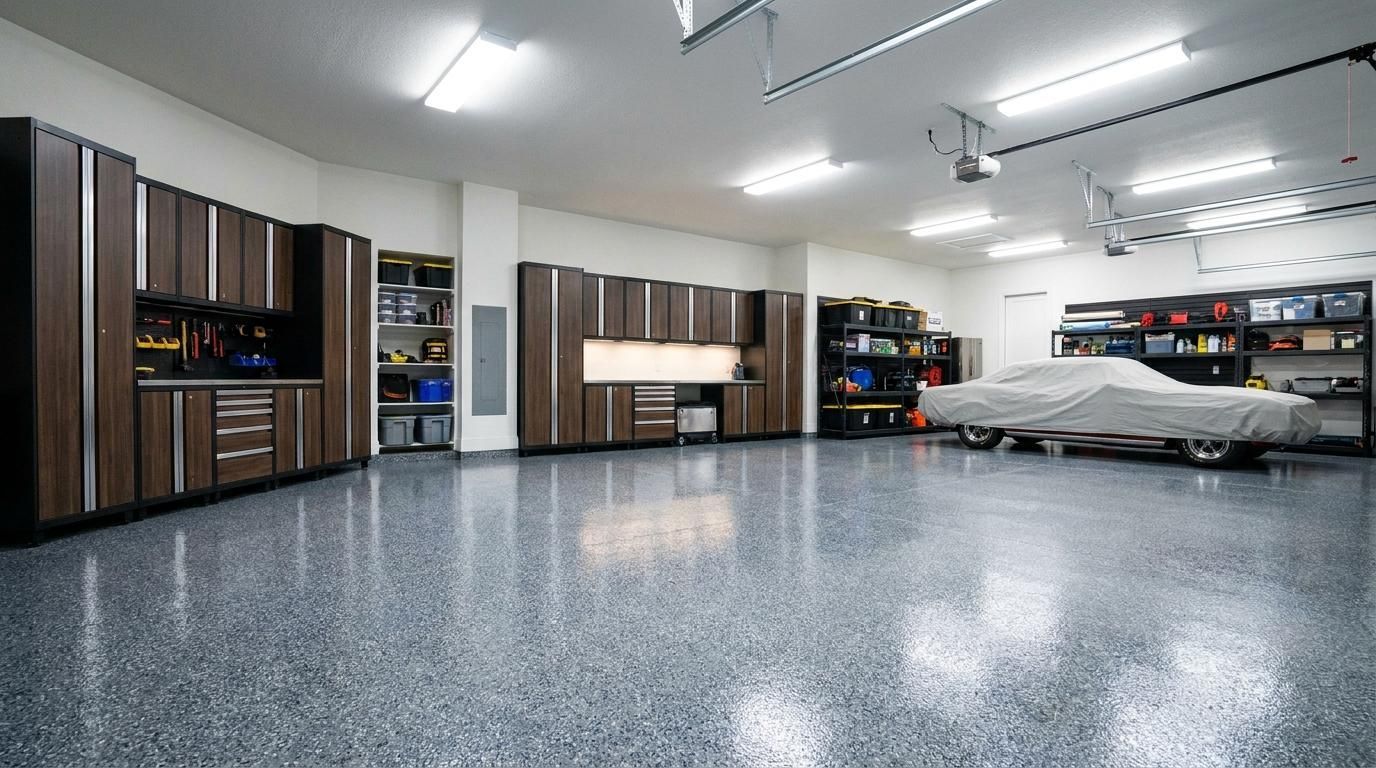
How To Install Epoxy Floor Coatings: Step-by-Step DIY Guide
The allure of a professional-grade epoxy floor is undeniable: a seamless, durable, and stunning surface that transforms any space. For many homeowners and business owners, the next thought is often, "Can I do this myself?" The process of installing epoxy floor coating is deceptively simple in theory, but incredibly complex in execution, especially when aiming for a finish that lasts decades.

At Concrete Surface Pros, we believe in empowering our clients with knowledge. While we specialize in professional, guaranteed installations, we want to walk you through the critical steps of the process. This will help you understand why surface preparation is non-negotiable and why, particularly in the challenging climate of Tampa, FL, professional expertise often means the difference between a floor that lasts and one that fails.
Step 1: The Non-Negotiable: Surface Preparation

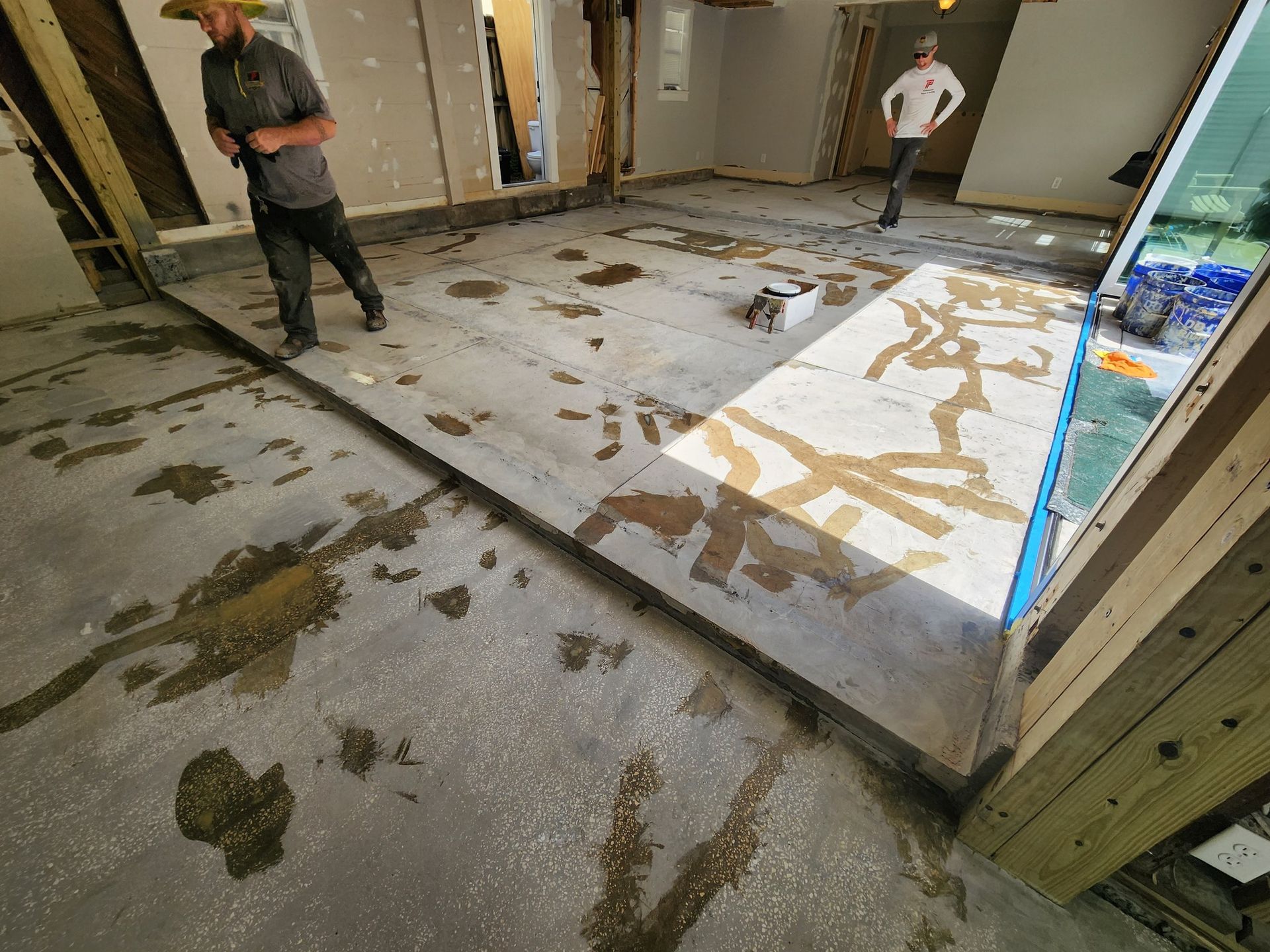
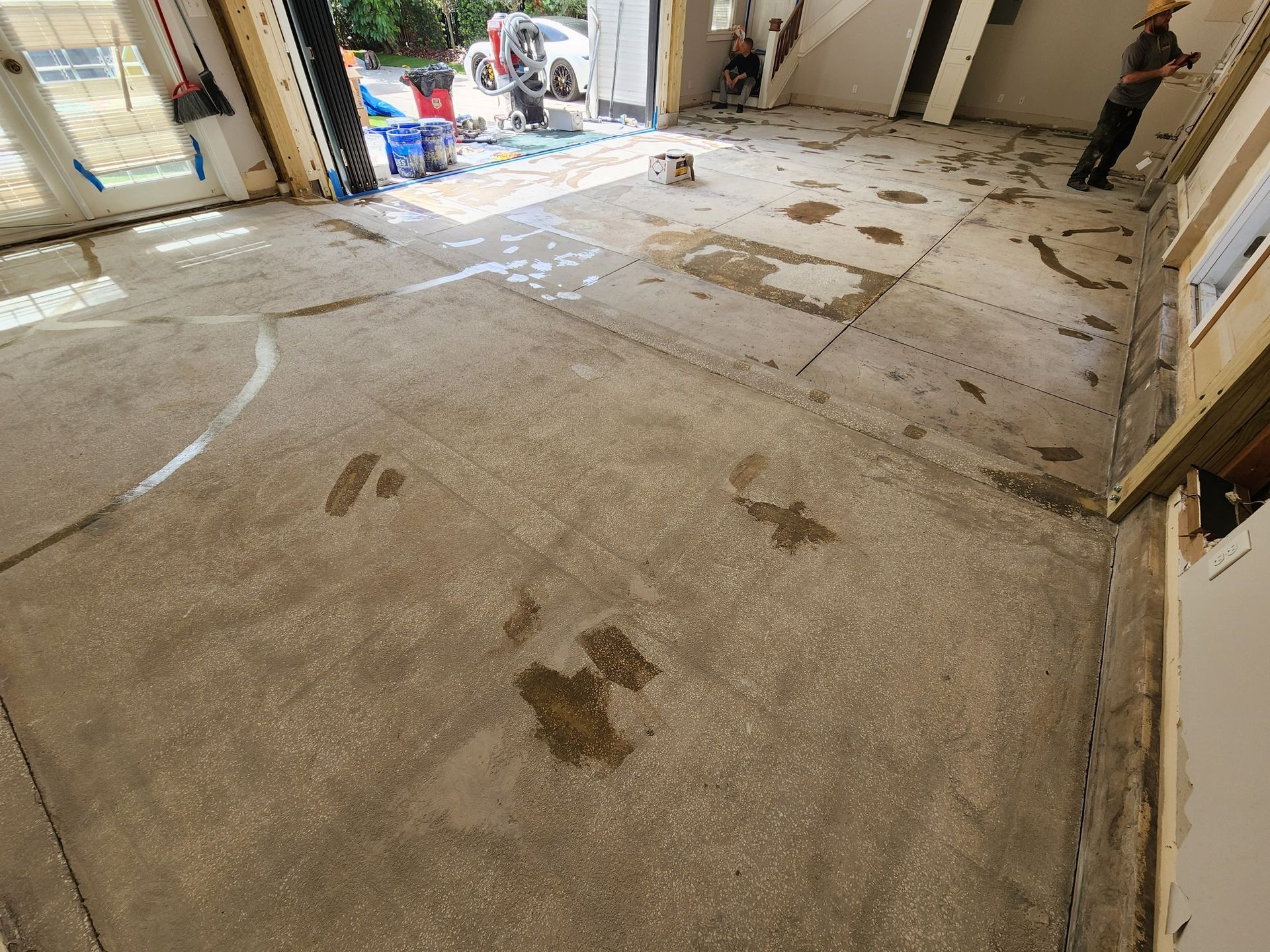
If you take one thing away from this guide, let it be this: surface preparation is 90% of the job. A coating is only as good as the concrete it adheres to. In the Tampa Bay area, concrete slabs are often exposed to high humidity, oil stains, and efflorescence, all of which must be completely removed.

The Professional Approach: We use professional diamond grinders and scarifiers to mechanically abrade the concrete. This process opens the pores of the concrete, removes contaminants, and creates the ideal profile for the coating to bond permanently. DIY acid-etching kits simply cannot achieve this level of preparation, which is why so many DIY projects fail within the first year. Proper surface preparation also ensures the coating bonds evenly across the entire slab, eliminating weak spots that could later cause peeling or bubbling.
Step 2: Moisture Testing and Mitigation

This step is crucial in high-humidity environments like Hillsborough, Pinellas, Manatee, and Hernando counties. Concrete is porous, and moisture vapor constantly rises through the slab. If this moisture is trapped by the coating, it will cause bubbling and delamination.

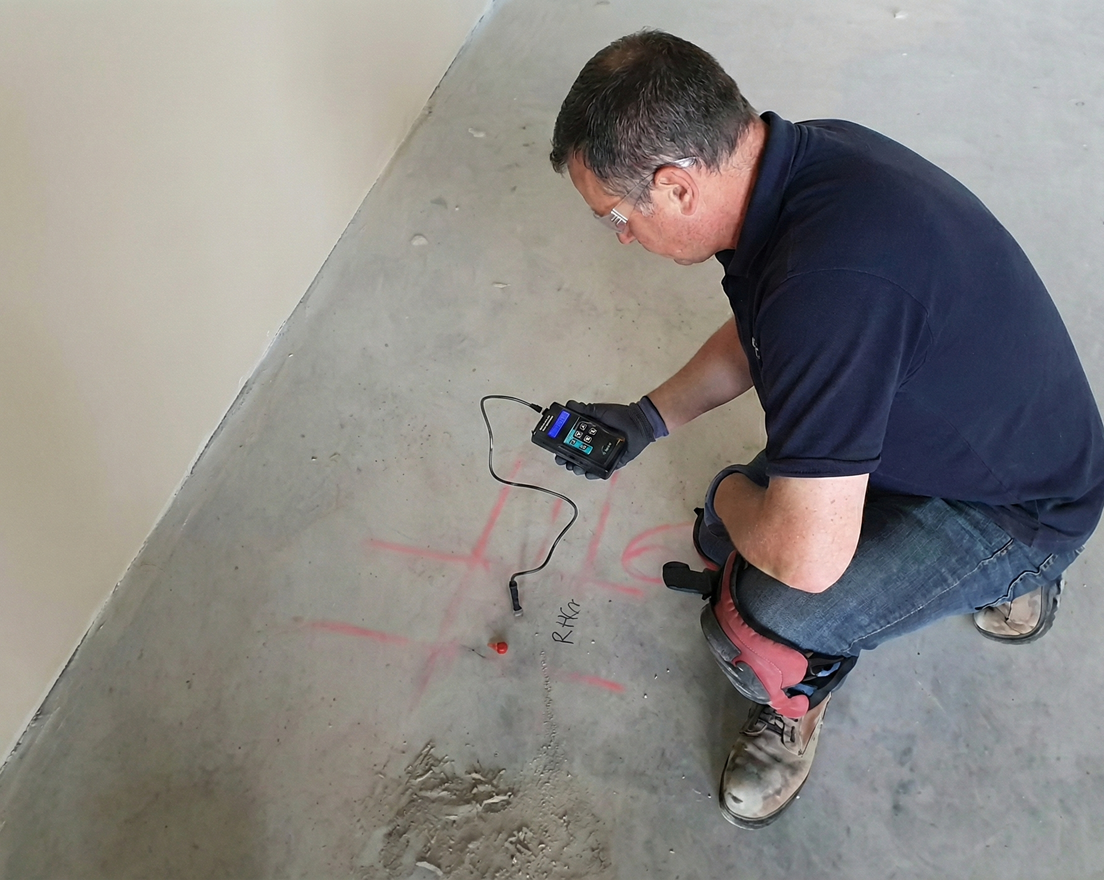
The Local Insight: We always perform a calcium chloride or relative humidity test. If the moisture vapor transmission (MVT) is too high, we apply a specialized moisture barrier primer. Skipping this step is a common DIY mistake that leads to failure in our Florida climate.
Step 3: Crack and Spall Repair

Before any coating is applied, all cracks, spalls, and divots must be repaired with a high-quality, flexible concrete repair product. This ensures a smooth, seamless finish and prevents future cracks from telegraphing through the new coating.
Step 4: Mixing the Materials

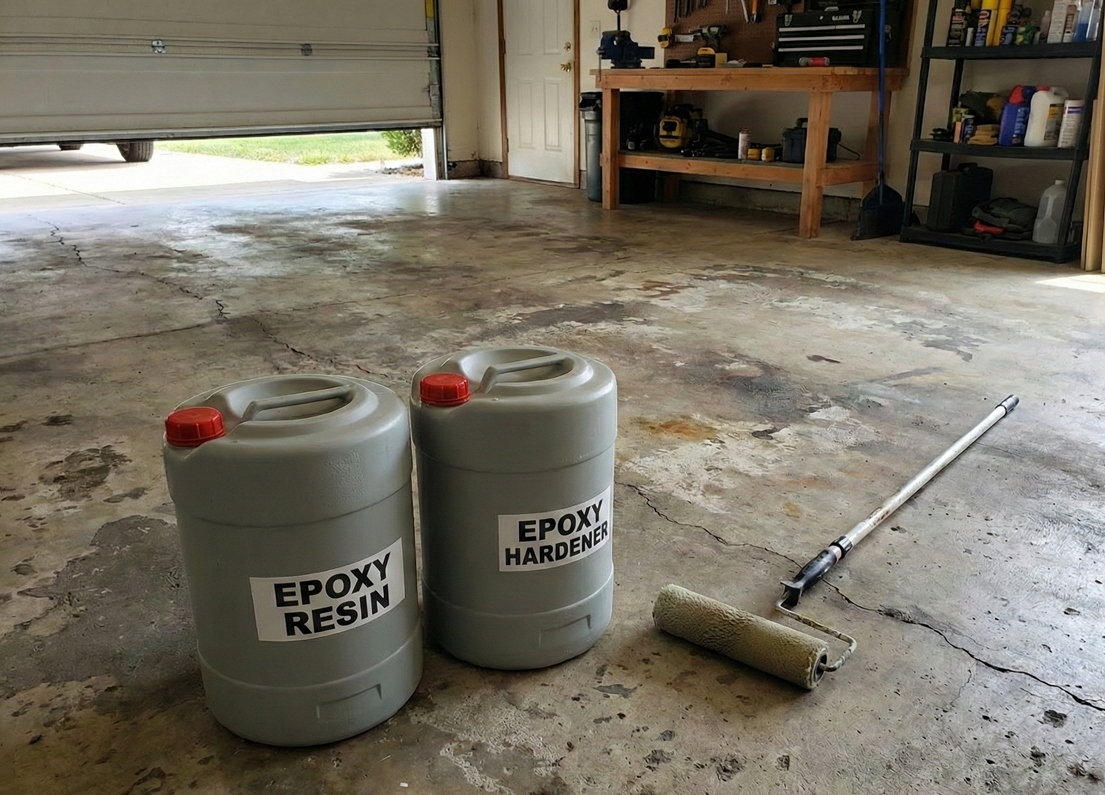
Epoxy and polyaspartic coatings are two-part systems (resin and hardener) that require precise mixing ratios. This is where the clock starts ticking, as these materials have a limited "pot life."
The DIY Challenge: You must mix the material thoroughly but quickly, and then immediately begin application. Any delay or an inaccurate mix will compromise the final cure and the floor's durability.
Step 5: Primer and Base Coat Application

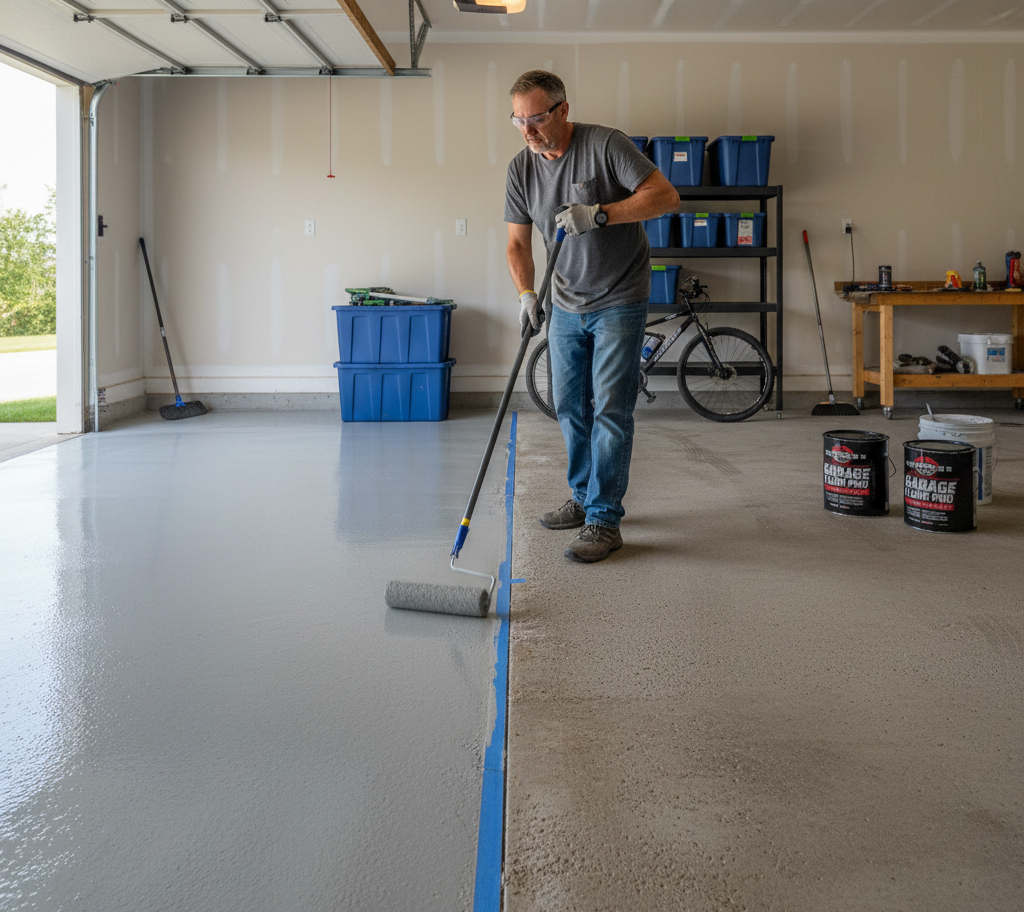
The first layer is the primer or base coat. This is rolled onto the prepared concrete surface. It must be applied evenly and within the manufacturer's specified window to ensure proper inter-coat adhesion. For our premium residential concrete coatings, we often use colored base coats or quartz-enhanced primers to enhance the floor’s durability and its final appearance.

A well-applied base coat improves the adhesion of decorative flakes or metallic pigments, ensuring a smooth, long-lasting finish that resists staining and wear.
Step 6: Flake or Aggregate Broadcast (If Applicable)

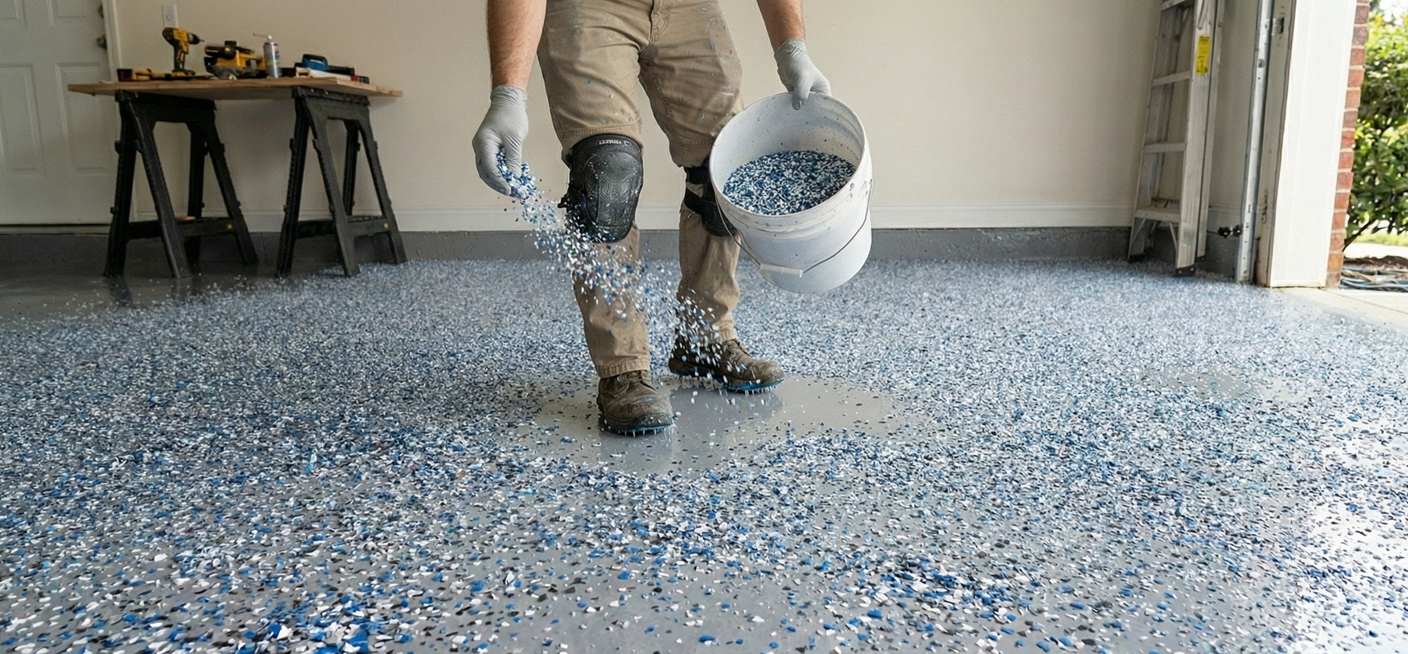
If you’re applying a decorative flake system, the flakes are broadcast into the wet base coat. This must be done quickly and evenly to achieve a uniform look. This is a skill that takes practice to master, as an uneven broadcast can ruin the aesthetic.
Step 7: Top Coat Application

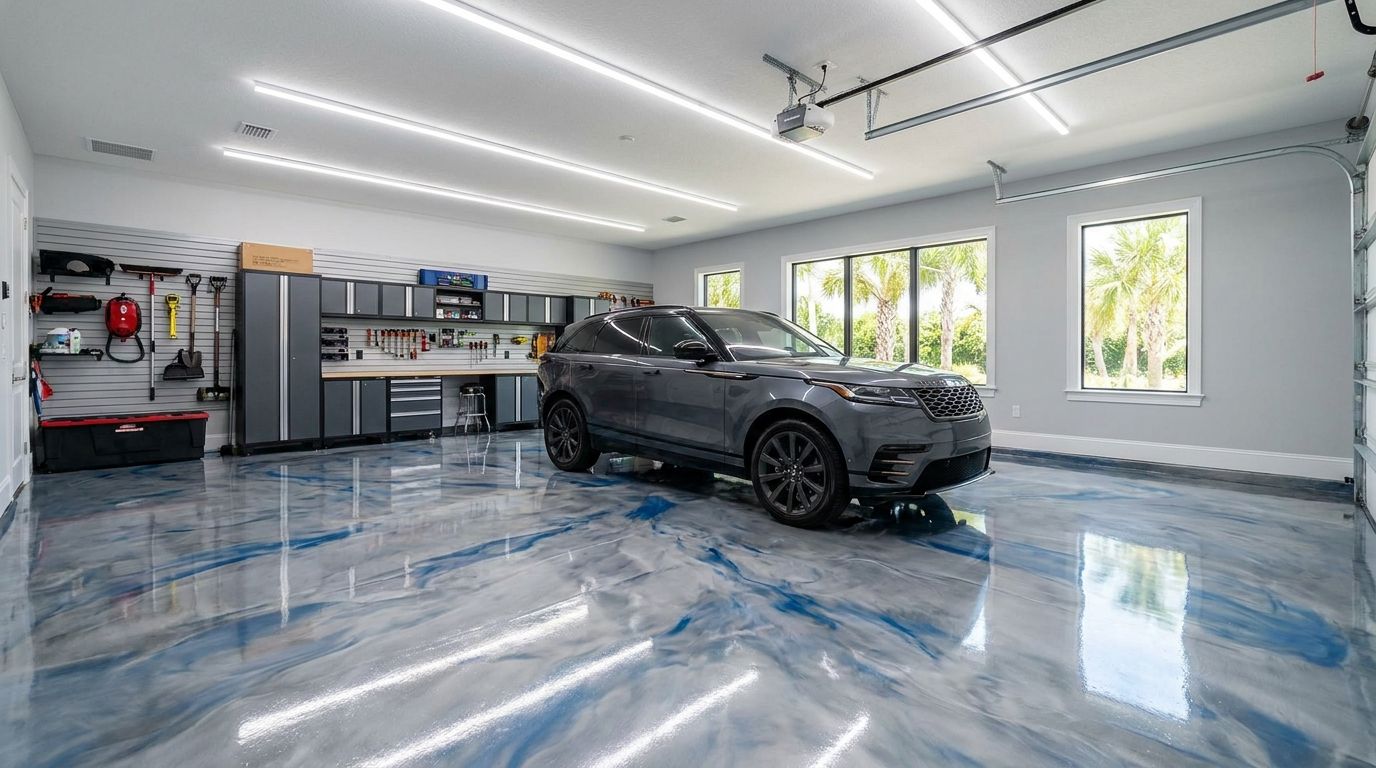
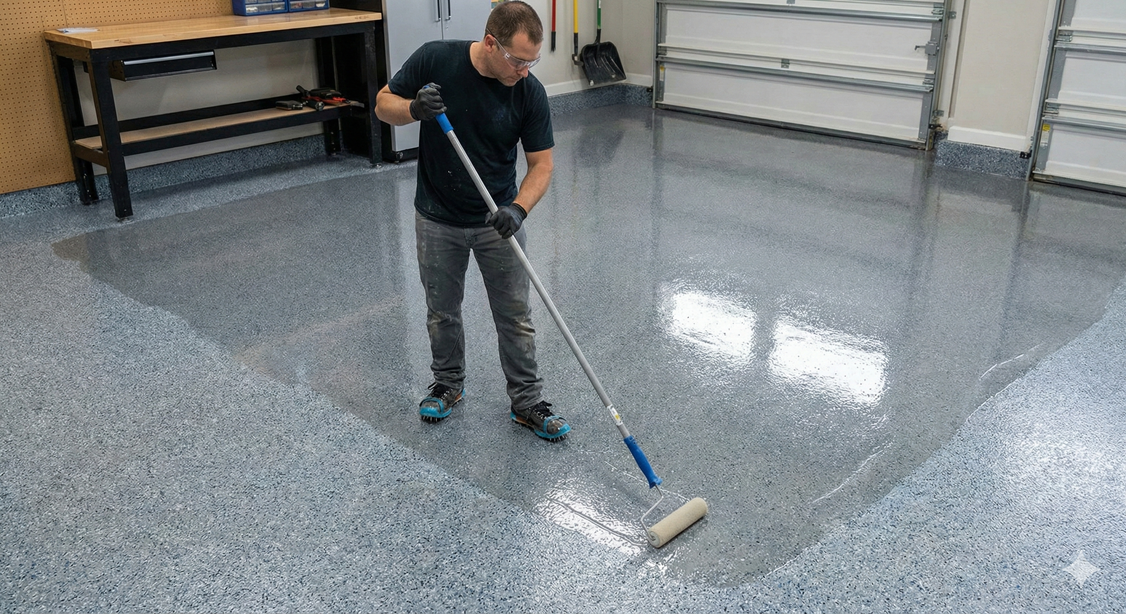
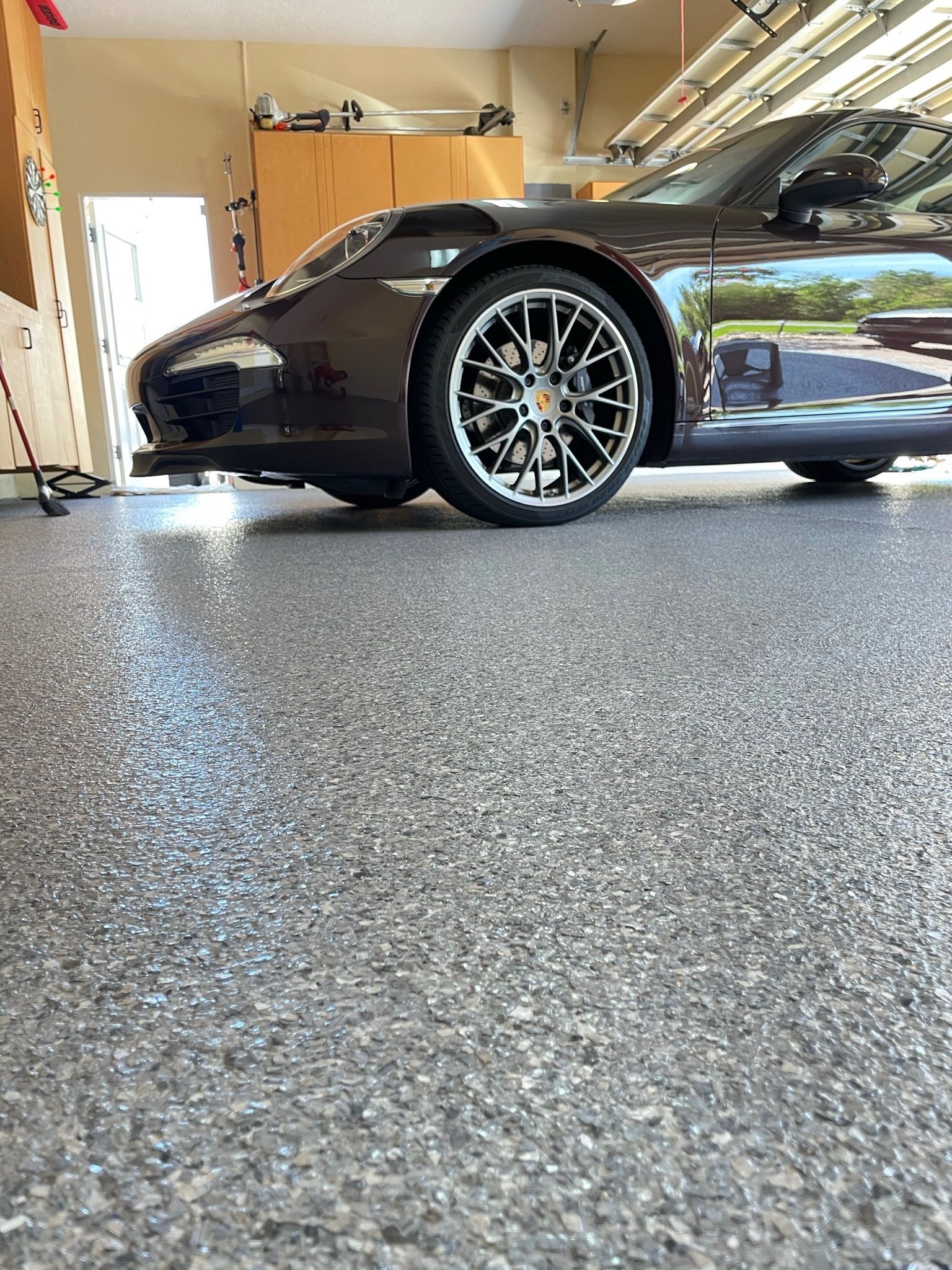
Once the base coat and flakes have cured, the excess flakes are scraped and vacuumed. The final step is applying the clear top coat, which seals the system and provides the final layer of protection against abrasion and chemicals. For high-traffic areas like garages, we use a durable polyaspartic or polyurethane topcoat for superior performance.

The True Cost of DIY vs. Professional Installation

While this step-by-step guide shows you how to install epoxy floor coating, it doesn't convey the difficulty, the cost of specialized equipment, or the risk of failure. A failed DIY job requires expensive removal and reinstallation.
When you choose Concrete Surface Pros, you’re investing in our expertise, our professional-grade equipment, and our premium materials. We handle the complexity, ensuring your floor is engineered to last. We proudly serve the counties of Hillsborough, Pinellas, Manatee, and Hernando, including the surrounding communities, with a 100% satisfaction guarantee.

Ready for a floor that’s done right the first time? Skip the stress of DIY and
contact us today for a free estimate.